
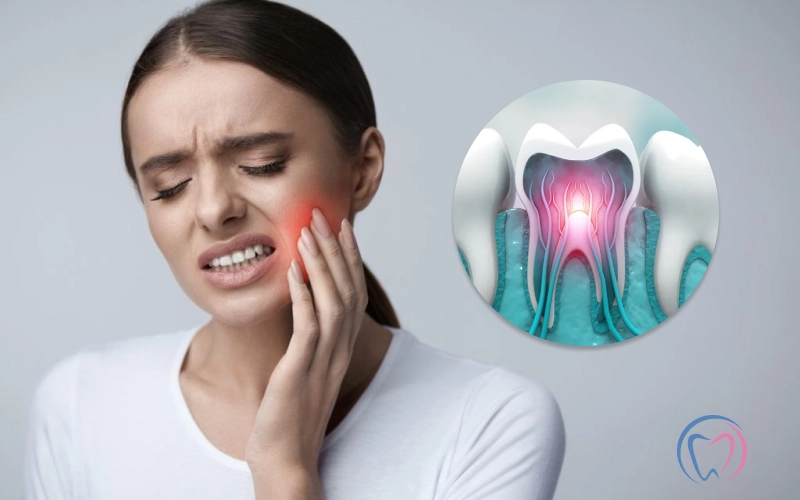
If you’re experiencing tooth nerve pain, over-the-counter pain relief, a cold compress and avoiding very hot or cold foods may help make the discomfort more manageable.
However, the relief may only be temporary.
Tooth nerve pain can develop when the sensitive structures inside a tooth become irritated, inflamed or infected. Depending on the cause, you may need a filling, root canal treatment or another dental procedure to resolve the problem.
If the pain is severe, keeps returning or lasts after eating or drinking, arrange a dental appointment promptly.
Important: Toothache accompanied by facial swelling, fever or difficulty swallowing needs urgent assessment. Difficulty breathing, significant neck swelling or swelling around the eye requires emergency medical care.
How to Relieve Tooth Nerve Pain at Home
If you cannot see a dentist immediately, the following measures may help you manage the discomfort.
1. Take Suitable Pain Relief
Over-the-counter medicines such as paracetamol or ibuprofen may temporarily relieve toothache.
Healthdirect Australia recommends speaking with a pharmacist or doctor about suitable pain relief and following the instructions on the packaging.
Ibuprofen is not appropriate for everyone, including some people with particular medical conditions or who take certain medications.
If you’re pregnant, have an existing medical condition or take prescription medicines, check with a pharmacist or doctor before using pain relievers.
Do not exceed the recommended dose because the tooth continues to hurt.
2. Try a Cold Compress
A cold compress against the outside of your cheek may help reduce discomfort, particularly if there is some swelling.
Wrap an ice pack in a clean towel and hold it against the affected area for short periods.
Avoid placing ice directly on your skin or against the painful tooth.
A cold compress may help with symptoms, but it cannot resolve inflammation or infection inside the tooth.
3. Avoid Hot, Cold and Sweet Foods
Temperature changes can trigger sharp pain in a sensitive or inflamed tooth.
Until you can see a dentist, try avoiding very hot drinks, ice-cold foods and anything that repeatedly causes discomfort.
Choose softer foods and chew on the opposite side if that feels more comfortable.
If a particular tooth hurts when you bite, avoid putting pressure on it.
4. Keep Your Mouth Clean
Continue brushing gently with a soft toothbrush and fluoride toothpaste.
If food is trapped between your teeth, carefully removing it with dental floss may help, provided you can do so without worsening the pain.
A mild warm salt water rinse may also offer temporary relief for some mouth irritation or mild toothache.
However, salt water cannot reach and treat an inflamed or infected tooth nerve.
5. Keep Your Head Slightly Raised
Some people notice more throbbing when lying flat.
Resting with your head supported by an extra pillow may help make the pain less noticeable.
If tooth pain repeatedly wakes you at night, arrange an urgent dental appointment rather than relying on sleeping position or pain medication.
Is It Tooth Sensitivity or Tooth Nerve Pain?
Not every sharp toothache means that the nerve inside the tooth is infected.
Sometimes the pain comes from exposed dentine, the sensitive layer underneath enamel. In other cases, it may be caused by inflammation of the dental pulp, the soft tissue inside the tooth containing nerves and blood vessels.
The Australian Dental Association explains that ordinary tooth sensitivity often causes a brief, sharp sensation when a tooth comes into contact with cold, heat or another trigger.
Pain that continues after the trigger is removed may indicate a more significant problem.
What Your Tooth Pain May Be Telling You
| What you experience | Possible explanation | Recommended next step |
|---|---|---|
| Brief sharp pain when drinking something cold | Exposed dentine or another cause of sensitivity | Arrange a dental assessment, especially if it recurs |
| Pain that lingers after hot or cold food | Possible inflammation inside the tooth | See a dentist promptly |
| Pain when biting or chewing | Possible cracked tooth, damaged filling or inflammation around the root | Avoid chewing on the tooth and arrange an examination |
| Constant throbbing pain | May indicate significant pulp inflammation or infection | Seek prompt dental care |
| Toothache with facial swelling, fever or pus | Possible dental abscess or spreading infection | Seek urgent professional assessment |
| Pain that suddenly disappears after being severe | Several explanations are possible, including loss of pulp vitality | Still have the tooth examined |
These patterns can help you describe your symptoms, but they cannot confirm a diagnosis.
A dentist may need to examine the tooth, perform sensitivity tests and take X-rays to determine what is causing the pain.
What Causes Tooth Nerve Pain?
Several dental problems can affect the sensitive structures inside a tooth.
Deep Tooth Decay
Tooth decay begins when acids produced by plaque bacteria damage the tooth’s enamel.
If it progresses through the outer layers and towards the pulp, it can cause inflammation and increasingly severe pain.
Early decay and advanced decay require different treatment.
Our guide to whether tooth decay can be reversed explains why some early enamel changes can be managed without a filling, while established cavities generally need professional treatment.
Cracked or Broken Teeth
A crack can expose sensitive tooth structures or allow irritation to reach the pulp.
Some people experience sharp pain when biting, while others notice sensitivity to temperature changes.
Cracks are not always visible, so a dentist may need to perform specific tests to identify the affected tooth.
Worn Enamel or Receding Gums
When enamel wears away or the gums recede, dentine may become exposed.
This can produce a sharp sensation when drinking something cold, eating sweet foods or brushing.
Although the pain can feel intense, exposed dentine does not necessarily mean the dental pulp is infected.
Damaged Fillings
A filling that has become loose, worn or damaged can expose sensitive areas of the tooth.
Decay can also develop around an existing restoration.
Depending on the extent of the problem, replacing the filling may be sufficient, or more extensive treatment may be necessary.
Dental Abscess
A dental abscess is caused by a bacterial infection that can develop inside a tooth or around its root.
It may cause throbbing pain, swelling, a bad taste in the mouth or fever.
Healthdirect’s guide to tooth abscesses explains that an abscess requires prompt treatment because the infection can spread.
Teeth Grinding
Grinding or clenching places repeated pressure on teeth.
Over time, this may contribute to enamel wear, cracks and tooth sensitivity.
Our article on teeth grinding treatments in Australia explains the common approaches used to manage the condition.
Can an Inflamed Tooth Nerve Heal on Its Own?
Sometimes, but it depends on how severely the pulp has been affected.
Dentists distinguish between two important conditions.
Reversible Pulpitis
Reversible pulpitis means the pulp is irritated or mildly inflamed but may recover once the cause is treated.
For example, removing early decay and restoring the tooth may allow the inflammation to settle.
Treatment is still important because the condition can progress if the underlying cause remains.
Irreversible Pulpitis
Irreversible pulpitis occurs when the inflammation has progressed to a point where the pulp is unlikely to recover.
This can cause severe, prolonged or spontaneous tooth pain.
According to the Australian Dental Association’s guidance on antibiotics and dental pain, irreversible pulpitis generally requires root canal treatment or tooth extraction.
Antibiotics do not reliably relieve pain caused by irreversible pulpitis.
The key difference: A tooth that briefly reacts to cold may have a very different problem from one that throbs continuously.
You cannot reliably determine which condition you have from the pain alone.
What Dental Treatments Can Stop Tooth Nerve Pain?
The right treatment depends on what is causing the discomfort and whether the tooth can be preserved.
Dental Filling
If the tooth has a cavity but the pulp remains capable of recovering, the dentist may remove the decay and restore the tooth with a filling.
This may be enough to resolve the sensitivity or pain.
Root Canal Treatment
When the pulp is irreversibly inflamed or infected, root canal treatment may be recommended to save the tooth.
During the procedure, the dentist removes the affected pulp, cleans and disinfects the root canals, and seals them.
The tooth is then restored with a filling or crown.
Healthdirect’s root canal treatment guide explains how the procedure can help preserve a damaged or infected tooth.
Tooth Extraction
If the tooth is too badly damaged to be restored predictably, extraction may be necessary.
However, severe pain does not automatically mean the tooth needs to be removed.
A dentist will consider the tooth’s structure, the extent of infection and available treatment options before recommending extraction.
Treatment for Sensitivity
When the problem involves exposed dentine rather than significant pulp inflammation, treatment may be less involved.
A dentist might recommend desensitising toothpaste, fluoride treatments, bonding or addressing the underlying cause of enamel wear or gum recession.
This is one reason accurate diagnosis matters.
Will Antibiotics Relieve Tooth Nerve Pain?
Usually not when the pain is caused by inflammation inside the tooth.
Antibiotics treat certain bacterial infections. They do not remove inflamed pulp tissue or repair a damaged tooth.
The Australian Dental Association explains that antibiotics generally do not provide significant pain relief for irreversible pulpitis.
Even when an infection is present, antibiotics alone may not resolve the underlying dental problem.
A dentist may need to drain an abscess, perform root canal treatment or remove the affected tooth.
Antibiotics may be appropriate when there is a spreading infection or signs of systemic illness, such as fever, but they should only be used when prescribed by a qualified healthcare professional.
Do not take leftover antibiotics to treat toothache.
What Should You Avoid When Trying to Relieve Tooth Nerve Pain?
Some home remedies can cause further irritation or delay necessary treatment.
Avoid:
- placing aspirin directly on your gums or tooth
- applying undiluted essential oils to painful tissues
- attempting to drill, scrape or open the tooth yourself
- taking more pain medication than recommended
- using leftover antibiotics without medical advice
- repeatedly applying home remedies while symptoms become worse
Temporary relief can be useful while arranging an appointment, but persistent pain needs a professional diagnosis.
When Should You See a Dentist for Tooth Nerve Pain?
Arrange a dental assessment promptly if the pain:
- lasts longer than a day or two
- repeatedly returns
- continues after hot or cold food is removed
- prevents you from sleeping or eating
- becomes worse when biting
- does not improve with suitable pain relief
If you also develop fever, swelling, pus or a persistent unpleasant taste, seek urgent dental care rather than waiting for the pain to settle.
Seek emergency medical care immediately if you experience difficulty breathing or swallowing, rapidly spreading swelling, or swelling around the eye or neck.
In Australia, call 000 for a life-threatening emergency.
You can also contact Healthdirect on 1800 022 222 for health advice if you are unsure what level of care you need.
What If Tooth Nerve Pain Suddenly Stops?
Pain disappearing does not always mean the problem has healed.
Sometimes brief sensitivity settles because the trigger has been removed or the irritation has improved.
However, if a tooth has been severely painful and suddenly becomes painless, one possible explanation is that the pulp has lost its vitality.
An infection may still develop or remain around the root.
If you have experienced severe or persistent tooth pain, arrange an examination even if the symptoms have unexpectedly improved.
Frequently Asked Questions
What Is the Fastest Way to Relieve Tooth Nerve Pain?
Suitable over-the-counter pain medication and avoiding painful triggers may help temporarily.
A cold compress can also help with discomfort or swelling.
There is no home remedy that reliably treats irreversible pulp inflammation or infection. Dental treatment may be necessary for lasting relief.
Why Is Tooth Nerve Pain Worse at Night?
Toothache can feel more noticeable at night because there are fewer distractions, and lying flat may increase throbbing for some people.
Keeping your head slightly raised may help.
Persistent night-time toothache should be assessed promptly by a dentist.
Can Salt Water Kill a Tooth Nerve?
No.
Salt water cannot kill or remove the nerve inside a tooth.
A mild rinse may provide temporary relief for some irritation, but it cannot treat deep decay, irreversible pulpitis or an infection inside the tooth.
Can Tooth Nerve Pain Go Away Without a Root Canal?
Yes, depending on the cause.
Pain from dentine sensitivity or reversible pulp inflammation may improve with appropriate treatment.
However, irreversible pulpitis generally requires root canal treatment or extraction.
A dentist needs to assess the tooth before determining whether the pulp can recover.
Does Severe Tooth Pain Mean I Need an Extraction?
Not necessarily.
Some severely painful teeth can be preserved with root canal treatment.
Extraction may be necessary if the tooth is too damaged to be restored.
Pain intensity alone does not determine which treatment is appropriate.
Can Sensitive Toothpaste Relieve Tooth Nerve Pain?
Desensitising toothpaste may help when the pain is caused by exposed dentine.
It is not a substitute for treatment when a tooth has deep decay, significant pulp inflammation or infection.
If sensitivity persists or becomes more severe, arrange a dental appointment.
Getting Lasting Relief From Tooth Nerve Pain
Tooth nerve pain can be difficult to manage, particularly when it interferes with eating or sleeping.
Pain medication and simple home care may make you more comfortable, but lasting relief depends on identifying what is causing the problem.
A short, sharp response to cold may require a different treatment from constant throbbing or pain caused by an infected tooth.
If your symptoms persist, return or become severe, speak with a dentist.
Early assessment may allow simpler treatment and improve the chances of preserving the affected tooth.
Sources and Further Reading
- Healthdirect Australia: Toothache and Gum Swelling
- Australian Dental Association: Sensitive Teeth
- Australian Dental Association: 3 Reasons You May Not Need Antibiotics at the Dentist
- Healthdirect Australia: Root Canal Treatment
- Healthdirect Australia: Tooth Abscess
This article is for general educational purposes and does not replace personalised advice from a registered dental professional. Seek urgent dental or medical care for severe pain, spreading swelling or other concerning symptoms.