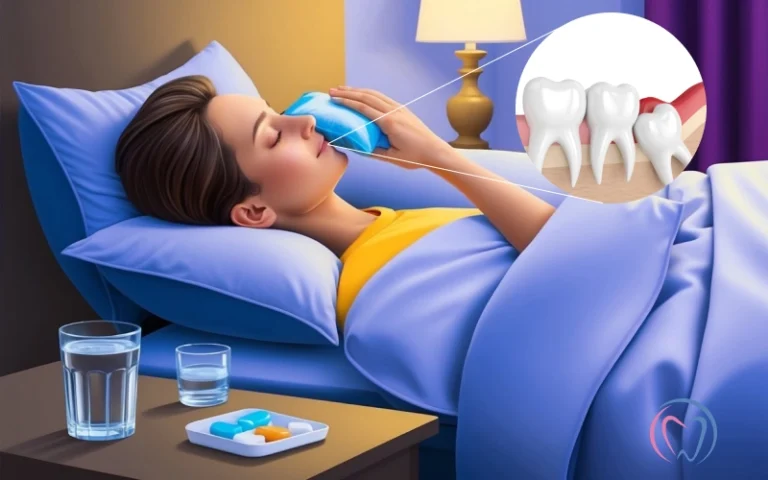

You may be able to sleep on your side after a tooth extraction, even on the first night, provided the bleeding has settled, you can keep your head slightly raised and the position does not put uncomfortable pressure on the treated area.
There is no universal rule that everyone must sleep on their back for exactly 48 hours after having a tooth removed.
The first day or two is an important part of recovery, so dentists commonly recommend resting with your head elevated and avoiding anything that could disturb the blood clot forming in the empty tooth socket.
If you prefer sleeping on your side, lying on the opposite side from the extraction may be more comfortable. After a difficult extraction or wisdom tooth surgery, you may need to adjust your sleeping position for longer.
Your dentist’s aftercare instructions should always take priority.
How Soon Can You Sleep on Your Side After a Tooth Extraction?
The answer depends on how the extraction went and how you are feeling afterwards.
A straightforward extraction may leave you with relatively little swelling or discomfort. Surgical removal, particularly of impacted wisdom teeth, can involve more tissue disturbance and a longer recovery.
The following timeline can help you understand what to consider.
| Time after extraction | What to consider when sleeping |
|---|---|
| First 24 hours | Keep your head raised and avoid pressure on the treated area. If side-sleeping is comfortable and bleeding has settled, the opposite side may be reasonable |
| 24 to 48 hours | Continue using head support if you have swelling, bleeding or throbbing. Avoid lying on a tender cheek |
| Days 3 to 4 | Many people can gradually return to a comfortable position as symptoms settle |
| After several days | You may be able to resume your usual sleeping position if recovery is progressing normally |
| After complex surgery | Follow your surgeon’s instructions, as swelling and tenderness may require additional precautions |
This is a practical guide, not a clinically established side-sleeping schedule. Recovery differs between patients, and your dentist may recommend a different approach based on the procedure.
Why Does Sleeping Position Matter After Tooth Extraction?
When a tooth is removed, a blood clot forms inside the empty socket.
That clot protects the underlying bone and supports the early stages of healing.
The Queensland Government’s dental surgery aftercare guidance recommends keeping your head elevated rather than lying flat to reduce the risk of bleeding.
This is particularly useful during the initial recovery period when the area may still be tender or swollen.
There are three practical reasons to pay attention to your sleeping position.
1. Managing Bleeding
Some blood-stained saliva or minor oozing can occur after an extraction.
Lying completely flat may make bleeding or throbbing more troublesome for some people.
Keeping your head raised can help manage these symptoms while the extraction site settles.
2. Reducing Pressure on a Sore Cheek
If you sleep directly on the side where the tooth was removed, your pillow may press against a tender or swollen cheek.
This can be uncomfortable, especially after a surgical extraction.
Choosing the opposite side may help you rest without putting unnecessary pressure on the treated area.
3. Getting Comfortable Without Disturbing the Extraction Site
Rest is important after dental treatment, but you do not need to remain completely still throughout the night.
The main concern is avoiding actions that disturb the healing socket, such as vigorous rinsing, forceful spitting or suction in the mouth.
Simply changing sleeping position is not an established cause of dry socket.
What Is the Best Sleeping Position After Tooth Extraction?
For the first night, a comfortable position with your head slightly elevated is a sensible starting point.
According to the Oral Health Foundation’s tooth extraction aftercare guidance, using extra pillows to keep the head raised may help reduce bleeding.
You can try the following arrangements depending on what feels comfortable.
Sleeping on Your Back
Resting on your back with your head supported by an extra pillow or wedge cushion can help you avoid direct pressure on either cheek.
It may be particularly comfortable after a procedure involving several teeth or both sides of the mouth.
You do not need to force yourself into an uncomfortable position, however. If you have another health condition that affects how you should sleep, follow your medical advice.
Sleeping on the Opposite Side
If you normally sleep on your side, try lying on the side opposite the extraction.
For example, if a lower right molar was removed, you may find sleeping on your left side more comfortable.
A supportive pillow can help keep your head slightly raised without twisting your neck.
This can be a practical option when sleeping on your back is difficult.
Sleeping on the Extraction Side
Sleeping directly on the treated side may become comfortable as swelling and tenderness improve.
There is no fixed day when this becomes safe for everyone.
If resting on that cheek increases pain, pressure or throbbing, change position and allow more time.
After complex oral surgery, ask your dentist or surgeon whether they want you to avoid pressure on the operated side for a specific period.
Can Sleeping on Your Side Cause Dry Socket?
There is no good clinical evidence establishing ordinary side-sleeping by itself as a direct cause of dry socket.
Dry socket, also called alveolar osteitis, occurs when the blood clot inside an extraction socket breaks down, is lost too early or does not form adequately.
The bone underneath may become exposed, causing significant pain.
The Cochrane review on dry socket prevention and treatment discusses measures used to reduce the risk of this complication, including certain antiseptic rinses and gels. It does not establish a mandatory back-sleeping period.
Known risk factors include smoking, difficult extractions and some patient-related factors.
Avoiding pressure on a tender cheek can help with comfort, but it should not be confused with a proven way of preventing dry socket.
What Actually Helps Protect the Blood Clot?
During the early healing period:
- Avoid vigorous rinsing and forceful spitting.
- Do not poke or repeatedly touch the extraction socket.
- Avoid smoking and vaping.
- Follow your dentist’s instructions about drinking through straws.
- Avoid strenuous activity immediately after treatment.
- Follow the recommended cleaning and mouth-rinsing routine.
These precautions are more directly related to protecting the healing site than enforcing a strict sleeping position.
How to Sleep Comfortably on the First Night
The first night can feel awkward, especially if your mouth is still numb or your jaw feels sore.
A few simple preparations can make resting easier.
Use a Supportive Pillow
An extra pillow or wedge cushion can help keep your head elevated.
Aim for a comfortable position that supports your neck rather than stacking pillows so high that your head bends forward.
If you prefer side-sleeping, you can still arrange your pillows to keep your head raised.
Keep Your Sleeping Area Comfortable
Set up your pillows before going to bed so you are not constantly adjusting them while tired.
You may also want to place a clean towel over your pillowcase in case a small amount of blood-stained saliva escapes during the first night.
Follow Your Pain Relief Instructions
Discomfort may become more noticeable as the local anaesthetic wears off.
Take any prescribed or recommended pain relief according to your dentist’s instructions.
Do not take additional medication simply to make yourself sleepy.
If you were given sedation or a general anaesthetic, follow the specific discharge instructions about medication, supervision and rest.
Avoid Alcohol and Smoking
Alcohol and smoking can interfere with recovery.
Smoking is also a recognised risk factor for dry socket.
The Merck Manual’s tooth extraction aftercare guidance recommends avoiding smoking and taking care not to disturb the socket while it heals.
Should You Sleep With Gauze in Your Mouth After Tooth Extraction?
No. You should not fall asleep with loose gauze in your mouth.
Gauze is used to apply pressure when bleeding needs to be controlled. It is not intended to remain in your mouth throughout the night.
Leaving gauze in place while sleeping creates a risk of it becoming displaced.
The Merck Manual’s aftercare guidance discusses using gauze while awake to control bleeding, rather than keeping it in place during sleep.
If the extraction site is still bleeding enough that you feel you need gauze continuously, contact your dentist for advice before going to sleep.
A small amount of blood-stained saliva can be normal after an extraction, but ongoing active bleeding should not be ignored.
What if You Accidentally Roll Onto the Extraction Side?
Waking up on the side where your tooth was removed does not automatically mean you have damaged the extraction site.
If you roll over while sleeping, check how you feel when you wake up.
If there is no new bleeding, unusual pain or other concerning symptom, you generally do not need to assume something has gone wrong simply because you changed position.
If the cheek feels sore or swollen, move back to a more comfortable position.
There is no need to repeatedly inspect or touch the socket to see whether the clot is still there.
If you develop persistent bleeding or severe pain, speak with your dentist.
Is Sleeping After Wisdom Teeth Removal Different?
It can be.
Wisdom tooth removal sometimes requires an incision in the gum, removal of surrounding bone or dividing the tooth into smaller sections.
These procedures can cause more swelling, jaw stiffness and discomfort than a straightforward extraction.
If you have had an impacted wisdom tooth surgically removed, keeping your head raised and avoiding pressure on the operated side may help you rest more comfortably for the first few nights.
People who have had multiple wisdom teeth removed may find that neither side feels particularly comfortable at first.
In that situation, sleeping on your back with suitable head support may be easier.
However, the number of nights required will depend on your recovery rather than a fixed rule.
For more information about looking after the socket, managing discomfort and returning to normal activities, see our tooth removal recovery tips.
A First-Night Checklist After Tooth Extraction
Before going to bed, it can help to check a few simple things.
| Question | What to do |
|---|---|
| Has the active bleeding stopped? | If not, follow your dentist’s pressure instructions and contact the clinic if bleeding persists |
| Is there gauze in your mouth? | Remove it before sleeping. Do not sleep with gauze in place |
| Is your head supported? | Use an extra pillow or wedge if comfortable |
| Does your cheek hurt against the pillow? | Change position or try the opposite side |
| Have you followed your pain relief instructions? | Take medication only as directed |
| Have you been given special surgical instructions? | Follow those instead of general online advice |
This checklist is particularly useful if you are tired after treatment and unsure whether you have prepared properly for the night.
What Should You Avoid Before Going to Sleep?
A few activities can interfere with the early healing process, regardless of how you sleep.
Rinsing Too Soon
Avoid vigorous mouth rinsing during the initial healing period.
Many dental aftercare instructions advise waiting until the following day before starting gentle warm salt water rinses.
Follow your dentist’s recommended timing, especially if you have had surgical treatment.
Eating Hard or Crunchy Foods
Choose soft foods while the area is tender.
Hard, sharp or crunchy foods may irritate the extraction site or become trapped around the socket.
Avoid eating while your mouth is still significantly numb.
Strenuous Activity
Heavy exercise or activities that increase bleeding should generally be avoided immediately after extraction.
Take the opportunity to rest during the first day.
When Should You Be Concerned About Pain or Bleeding Overnight?
Some discomfort and minor blood-stained saliva can occur after an extraction.
What matters is whether symptoms are settling or becoming more concerning.
Contact your dentist promptly if you experience:
- bleeding that does not settle with the pressure measures you were given
- severe pain that is not controlled by recommended pain relief
- increasing facial swelling
- fever or feeling generally unwell
- a persistent unpleasant taste or discharge
- pain that becomes much worse a few days after the extraction
Pain that intensifies several days after treatment, particularly if it spreads towards the ear or side of the face, may indicate dry socket.
Seek urgent medical help if swelling affects your breathing or swallowing, or if you develop severe uncontrolled bleeding.
These symptoms need professional attention rather than a change of sleeping position.
Frequently Asked Questions
Can I Sleep on My Side the First Night After Tooth Extraction?
Possibly. If bleeding has settled, you can keep your head supported and the position is comfortable, sleeping on the side opposite the extraction may be reasonable.
There is no universal rule requiring everyone to remain on their back for the first night.
Follow any restrictions given by your dentist.
How Many Nights Should I Sleep With My Head Elevated?
Keeping your head raised during the first night or two is commonly recommended.
After a difficult extraction or surgery, you may find it helpful for longer.
You can gradually return to your usual position as swelling and discomfort improve, unless your dentist advises otherwise.
Can I Sleep Flat After Tooth Extraction?
Keeping your head slightly elevated is generally preferable during early recovery because it may help reduce bleeding and discomfort.
Queensland Government aftercare guidance recommends avoiding lying completely flat following dental surgery.
If you have difficulty resting with your head raised, ask your dentist about a comfortable alternative.
Which Side Should I Sleep on After a Right Tooth Extraction?
The left side may be more comfortable because it avoids direct pressure on the right cheek.
Keep your head supported and change position if you experience discomfort or bleeding.
Can I Sleep on the Extraction Side After 48 Hours?
You may be able to if the area is comfortable and healing normally.
There is no medically established rule that the extraction side automatically becomes safe after exactly 48 hours.
If pressure on the cheek still causes pain, give it more time.
How Long After Wisdom Teeth Removal Can I Sleep Normally?
This depends on the complexity of the extraction and your recovery.
Some people feel comfortable returning to their normal sleeping position after a few days. Others need longer, particularly after surgical removal of impacted teeth.
Your surgeon’s recommendations should guide the decision.
What if I Wake Up With Blood on My Pillow?
A small amount of blood mixed with saliva can leave a noticeable stain, particularly during the first night.
If you have active bleeding, sit upright and follow your dentist’s instructions for applying pressure with gauze while awake.
Contact your dentist if the bleeding continues or is heavy.
Does Sleeping on Your Side Increase the Risk of Dry Socket?
Side-sleeping itself has not been established as a direct cause of dry socket.
The main precautions involve protecting the clot, avoiding smoking and activities that disturb the socket, and following appropriate aftercare.
Returning to Your Normal Sleeping Position
There is no need to force yourself to sleep on your back for a set number of nights if that position is uncomfortable and your dentist has not specifically required it.
After tooth extraction, the priorities are to control bleeding, keep your head supported, protect the healing site and get adequate rest.
If you prefer sleeping on your side, the opposite side may be a comfortable option early in recovery. As tenderness and swelling settle, you can gradually return to your usual position.
If you have had complex dental surgery, follow the advice given by your treating dentist or oral surgeon.
Sources and Further Reading
- Queensland Government: Care After Dental Surgery
- Oral Health Foundation: What to Do After a Tooth Extraction
- Merck Manual: How to Do an Emergency Tooth Extraction, Aftercare
- Cochrane: What Treatments Can Be Used to Prevent and Treat Dry Socket?
This article is for general educational purposes and does not replace personalised advice from a registered dental professional. Follow the aftercare instructions provided by the clinician who performed your extraction.