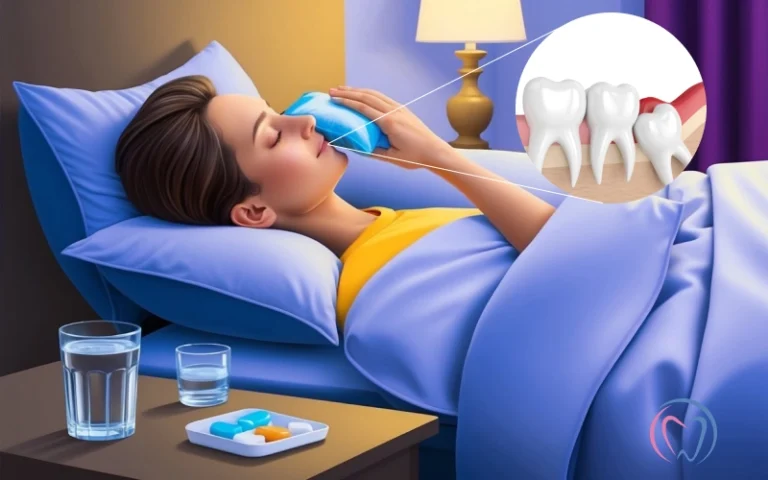

You can use a mild salt water rinse every day for a short period when there is a reason to use it, such as after certain dental procedures or for minor mouth irritation.
But for a healthy mouth, there is usually no clear reason to make salt water a permanent daily mouthwash.
Salt water can soothe irritated tissues and help keep healing areas clean. Australian health guidance recommends it in situations such as minor mouth injuries, inflamed wisdom tooth gums and recovery after tooth extraction.
What it does not do is replace brushing with fluoride toothpaste, cleaning between your teeth or treatment for an underlying dental problem.
So the better question is not simply, “Can I use salt water every day?”
It is:
What are you using it for, and how long do you actually need it?
What Is a Salt Water Mouth Rinse?
A salt water rinse is simply salt dissolved in warm water and gently moved around the mouth before being spat out.
It is sometimes called:
- a saline mouth rinse
- salt water mouthwash
- warm saline rinse
- salt water gargle
Dentists and health services commonly recommend saline rinses during short periods of healing or irritation because they are simple and generally well tolerated when prepared correctly.
For example, Healthdirect recommends warm salt water for minor mouth and tongue injuries to help relieve discomfort and reduce the chance of infection.
The Queensland Government also recommends warm salt water rinses for some oral injuries and soft-tissue trauma.
Is It Safe to Rinse With Salt Water Every Day?
For most adults, using a mild salt water rinse daily for a short period is unlikely to be a problem when it is used correctly and spat out.
That does not mean long-term daily use is necessary or proven to improve oral health.
Research specifically looking at salt-based oral treatments remains limited. A 2026 review of salt-based oral healthcare interventions found only a small number of studies using simple saline solutions, with short follow-up periods and considerable differences between study methods.
The researchers concluded that better-quality studies are still needed before broad evidence-based recommendations can be made.
That is an important distinction.
Salt water has recognised practical uses, particularly during healing, but it should not automatically become part of everyone’s permanent daily routine.
When Salt Water Rinses Can Be Useful
Salt water tends to make the most sense when there is a specific short-term reason for using it.
After a Tooth Extraction
A dentist may recommend warm salt water after an extraction to help keep the healing area clean.
Timing matters.
You generally should not rinse your mouth during the first 24 hours after an extraction, because vigorous rinsing can disturb the blood clot protecting the socket.
Queensland Health advises avoiding mouth rinsing for about 24 hours after tooth removal. After that period, it recommends gentle rinsing after meals with half a teaspoon of salt in a glass of lukewarm water. You can read the Queensland Health tooth extraction guidance here.
If you have recently had a tooth removed, follow the instructions given by your own dentist rather than starting a rinse based only on general online advice.
You can also read our tooth removal recovery tips for more information about looking after an extraction site.
Sore or Irritated Gums
Warm saline can sometimes help soothe irritated gum tissue.
However, bleeding, swollen or painful gums should not simply be managed indefinitely with salt water.
Persistent gum inflammation may be related to plaque buildup or gum disease.
Healthdirect’s guidance on gingivitis explains that treatment involves removing plaque and calculus and maintaining effective brushing and interdental cleaning.
Salt water might make the gums feel more comfortable, but it does not remove hardened calculus or treat established periodontitis.
Wisdom Tooth Gum Irritation
Salt water is also commonly recommended when the gums around an erupting wisdom tooth are irritated.
Healthdirect recommends mixing half a teaspoon of salt into a cup of warm water to rinse around inflamed wisdom tooth gums.
Severe pain, significant swelling or suspected infection still requires dental assessment.
Minor Mouth Injuries and Sores
Warm salt water may provide short-term relief when the tissues inside the mouth have been irritated or injured.
Healthdirect recommends saline rinsing for minor mouth and tongue cuts.
Queensland Health’s mouth rinses fact sheet also notes that mild warm salt water may be useful for minor mouth ulcers, throat irritation and denture sores.
A sore or ulcer that does not heal within about two weeks should be checked by a dentist or doctor.
What Salt Water Does Not Do
One reason salt water becomes overused is that a useful temporary rinse can start being treated as a complete oral hygiene treatment.
It is not.
Salt water does not replace:
- fluoride toothpaste
- brushing
- flossing or interdental cleaning
- professional dental cleaning
- treatment for tooth decay
- treatment for gum disease
- treatment for a dental infection
- prescribed mouth rinses when clinically required
A rinse can move loose debris around the mouth and may soothe tissues, but it cannot mechanically remove plaque as effectively as brushing and cleaning between the teeth.
Salt Water Does Not Give Your Teeth Fluoride Protection
This is one of the most important differences between a salt rinse and your normal oral hygiene routine.
Salt water does not provide the fluoride protection that comes from fluoride toothpaste.
The Australian Dental Association recommends brushing twice each day with fluoride toothpaste and cleaning between the teeth daily.
Fluoride helps protect tooth enamel against decay.
The ADA also recommends spitting out excess toothpaste without rinsing your mouth afterwards, so fluoride remains on the teeth for longer.
That leads to another question people often overlook.
Should You Use Salt Water Before or After Brushing?
If you are using fluoride toothpaste, avoid making a salt water rinse the immediate final step after brushing.
Rinsing straight afterwards can wash fluoride-containing toothpaste away from the teeth.
The Australian Dental Association’s tooth decay guidance recommends spitting after brushing without rinsing with water so fluoride stays on the teeth for longer.
If you need to use salt water, a practical option is to use it at another time of day or before brushing.
If your dentist has prescribed a particular routine after surgery or for another dental condition, follow those instructions instead.
A Simple Way to Arrange Your Routine
| Situation | A sensible approach |
|---|---|
| Healthy mouth with no symptoms | Salt water is usually unnecessary |
| Temporary gum or mouth irritation | Use for a short period if helpful |
| After tooth extraction | Follow your dentist’s instructions and avoid rinsing during the initial healing period |
| Using fluoride toothpaste | Avoid rinsing it straight off with salt water |
| Ongoing gum bleeding | See a dentist rather than relying on salt water |
| Persistent tooth pain | Get the cause assessed |
| Dentist has prescribed another rinse | Use the prescribed product as directed |
This is more useful than assuming everyone should follow the same daily mouthwash routine.
How Do You Make a Salt Water Mouth Rinse?
There is no single universal recipe used for every dental situation.
Australian health sources use slightly different concentrations depending on what the rinse is being recommended for.
For example:
- Healthdirect recommends half a teaspoon of salt in one cup of warm water for irritated wisdom tooth gums.
- Healthdirect recommends one teaspoon in one cup of water for some minor mouth injuries.
- Queensland Health recommends half a teaspoon in a glass of lukewarm water after the first 24 hours following a tooth extraction.
- The Queensland Health mouth rinses fact sheet also uses a mild salt water preparation for short-term oral care.
That tells us something useful:
More salt is not necessarily better.
If your dentist has recommended saline rinsing after treatment, use the concentration and frequency they give you.
For a general mild rinse when no specific instructions have been provided, half a teaspoon in a cup of comfortably warm water is commonly used in Australian dental guidance.
Swish gently and spit it out.
Do not swallow the solution.
How Often Can You Rinse With Salt Water?
The appropriate frequency depends on why you are using it.
After dental surgery, a dentist may recommend rinsing several times throughout the day for a limited period.
For a small oral injury or irritation, short-term use may also be suggested a few times a day.
If you have no dental problem and simply want to add salt water to your everyday oral hygiene routine, there is much less reason to use it frequently.
The best approach is to stop thinking of salt water as a fixed daily requirement and use it when there is a clear benefit.
Is Salt Water Better Than Mouthwash?
They are not direct substitutes because “mouthwash” can mean several different things.
The American Dental Association explains that mouthrinses can be cosmetic or therapeutic.
Therapeutic rinses may contain ingredients intended to help with:
- plaque
- gingivitis
- bad breath
- tooth decay
- dry mouth
Some are sold over the counter, while others are prescribed for particular conditions.
Salt water is much simpler.
It can be useful for soothing and gently cleaning irritated tissues, particularly during healing, but it does not contain the active ingredients found in purpose-designed therapeutic rinses.
That does not mean everyone needs commercial mouthwash either.
For many people, good brushing with fluoride toothpaste and daily interdental cleaning form the core of an effective oral hygiene routine.
Salt Water vs Mouthwash: Which Makes More Sense?
| Your goal | Salt water | Therapeutic mouthwash |
|---|---|---|
| Short-term soothing after dental treatment | Often useful when advised | Depends on the product and procedure |
| Minor mouth irritation | May help | Some products may also help |
| Preventing tooth decay | Does not provide fluoride protection | Fluoride rinses may help selected people |
| Managing plaque or gingivitis | Limited role | Some active ingredients have evidence for plaque control |
| Fresh breath | Temporary at best | Some products are designed for halitosis |
| Replacing brushing and flossing | No | No |
The important thing is to choose a rinse for a reason rather than simply because it feels like an extra cleaning step.
Can Too Much Salt Water Damage Your Teeth?
There is not good evidence that a correctly prepared mild saline rinse causes enamel damage simply because it contains salt.
This is where online advice can sometimes become more certain than the research supports.
The current scientific evidence around long-term salt-based oral interventions is limited, and studies use different preparations and concentrations.
Using an excessively strong solution may irritate the mouth or simply be unpleasant, but stronger salt water should not be assumed to provide better results.
If a mild rinse is not helping, increasing the salt concentration is not the answer.
The underlying problem may need dental treatment instead.
Can Salt Water Treat Gum Disease?
No.
Salt water may temporarily soothe inflamed gums, but gum disease is caused by bacterial plaque around the teeth and gums.
Periodontitis can also involve destruction of the tissues and bone supporting the teeth.
Healthdirect explains that gum disease treatment can involve professional removal of plaque and tartar, cleaning around tooth roots and improved home oral hygiene.
Rinsing alone cannot remove hardened tartar or reverse advanced gum disease.
If your gums repeatedly bleed, swell or feel tender, arrange a dental examination instead of trying to manage the symptoms indefinitely with salt water.
Can Salt Water Help With Toothache?
It may provide temporary relief from mild discomfort, but it cannot fix the source of tooth pain.
Healthdirect notes that gargling salt water may help with mild toothache.
Toothache can be caused by decay, cracks, infection, gum problems or other conditions that require dental treatment.
Pain that persists, becomes severe or occurs with swelling should be assessed by a dentist.
Can Salt Water Replace Fluoride Mouthwash?
No.
A salt water solution contains sodium chloride, not fluoride.
If a dentist has recommended a fluoride mouth rinse because you have a higher risk of tooth decay, replacing it with salt water removes the reason that particular product was prescribed.
The same applies to prescription antimicrobial rinses.
Use a prescribed rinse according to the instructions provided rather than substituting a home remedy.
When Should You Stop Relying on Salt Water and See a Dentist?
Salt water is best for temporary support, not for hiding ongoing symptoms.
Arrange a dental assessment if you have:
- persistent gum bleeding
- gum swelling that does not improve
- severe or ongoing toothache
- facial swelling
- pus or an unpleasant discharge
- a mouth ulcer lasting longer than two weeks
- persistent bad breath despite good oral hygiene
- increasing pain after a tooth extraction
- difficulty opening your mouth
- a dental problem that keeps returning
Home remedies can sometimes make symptoms feel better without treating the cause.
Feeling better temporarily does not always mean the dental problem has resolved.
Frequently Asked Questions
Can I Gargle Salt Water Every Night?
You can use a mild salt water rinse at night for a short period when there is a reason to do so.
For someone with a healthy mouth, nightly saline rinsing is usually unnecessary.
It should not replace brushing with fluoride toothpaste or cleaning between your teeth.
Is It Okay to Use Salt Water Mouthwash Twice a Day?
Short-term use twice daily may be reasonable in some situations, particularly when recommended after dental treatment or for minor irritation.
There is little evidence that healthy people gain additional long-term oral health benefits from making twice-daily salt rinsing a permanent habit.
Should I Rinse With Water After a Salt Water Rinse?
You usually do not need to rinse again with plain water after using a mild saline rinse unless your dentist has told you otherwise.
Spit the solution out rather than swallowing it.
Should Salt Water Be Used Before or After Brushing?
Avoid immediately rinsing away fluoride toothpaste.
If you want to use salt water as part of your routine, consider doing it before brushing or at another time of day.
After brushing, the Australian Dental Association recommends spitting out excess fluoride toothpaste without rinsing.
How Long Should You Use Salt Water After a Tooth Extraction?
Follow the instructions given by the dentist who performed the extraction.
Salt water rinsing is commonly started after the first 24 hours and continued during early healing, but the exact duration can vary.
Do not rinse vigorously around a fresh extraction socket.
Does Salt Water Kill Bacteria in Your Mouth?
Salt water can affect the oral environment and may help during healing, but describing it simply as a bacteria-killing mouthwash overstates what we currently know.
A 2026 review of salt-based oral healthcare interventions found that the evidence remains limited and inconsistent.
Salt water should not be treated as a substitute for proven plaque-control measures.
Can Salt Water Whiten Teeth?
Salt water is not a teeth-whitening treatment.
Do not scrub dry salt directly onto teeth in an attempt to remove stains, as abrasive home treatments can damage tooth surfaces and gums.
Can Children Use Salt Water Mouthwash?
A child should only use a mouth rinse if they can reliably rinse and spit without swallowing it.
For younger children or when salt water has been recommended for a particular dental problem, ask a dentist for advice first.
So, Should Salt Water Be Part of Your Daily Routine?
Salt water is useful because it is simple.
It can soothe irritated tissue, help keep certain healing areas clean and provide temporary relief in several common dental situations.
But usefulness does not mean everyone needs it every day.
For most people with a healthy mouth, the basics matter much more:
- brush twice daily with fluoride toothpaste
- clean between your teeth every day
- limit frequent sugary foods and drinks
- drink fluoridated tap water where available
- have dental check-ups based on your individual needs
Use salt water when there is a clear reason for it, particularly if your dentist recommends it.
If you find yourself needing a salt water rinse every day because your gums hurt, your mouth keeps becoming sore or a tooth repeatedly causes trouble, the next step should be finding out why.
Sources and Further Reading
- Australian Dental Association: Brushing Teeth
- Australian Dental Association: Tooth Decay
- Healthdirect Australia: Mouth and Tongue Cuts
- Healthdirect Australia: Mouth and Teeth
- Queensland Government: Emergency Dental
- Queensland Health: Mouth Rinses
- Queensland Health: Extractions of Adult Teeth, Patient Information
- American Dental Association: Mouthrinse (Mouthwash)
- Healthdirect Australia: Gum Disease
- Healthdirect Australia: Toothache and Gum Swelling
- PubMed: From Thermal Springs to Saline Solutions, A Scoping Review of Salt-Based Oral Healthcare Interventions
This information is for general educational purposes and does not replace personalised advice from a registered dental professional.
Written and editorially reviewed by the Aussie Dental Care Editorial Team