Sharp or pointy canine teeth are usually normal.
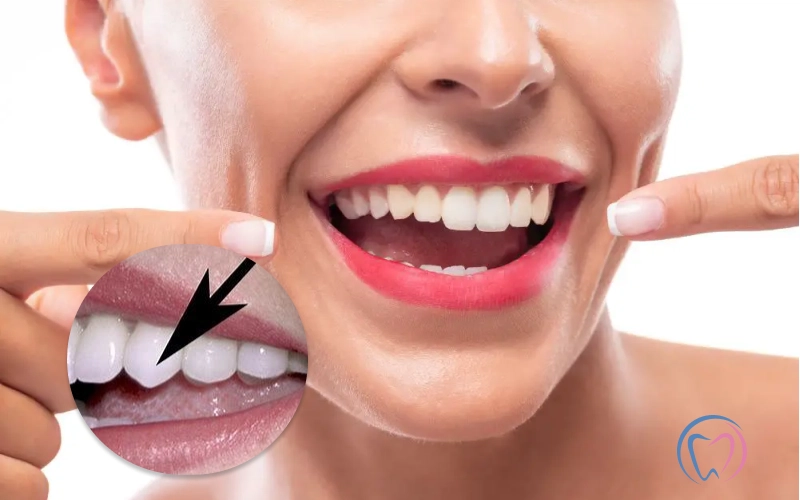
Canines are naturally shaped differently from the flatter front incisors and the broader teeth towards the back of your mouth. Their pointed tips help grip and tear food, so having noticeably sharp canines does not automatically mean there is anything wrong with your teeth.
Some people simply have canines that look longer or more pointed than others.
Treatment is generally only worth considering if the shape bothers you, the tooth is causing irritation, or the sharp appearance is actually related to another issue such as a chipped edge, unusual wear or tooth position.
Why Are Canine Teeth Naturally Pointed?
Adults normally have four canine teeth, with one on each side of the upper and lower front teeth.
Canines are also called cuspids because they usually have a single prominent cusp, or pointed tip.
Their shape is part of normal tooth anatomy. Canines help grip and tear food and also play a role in the way the upper and lower teeth come together during jaw movement.
You can learn more about their role in our guide to the different types of teeth.
Not everyone’s canines look exactly the same. Natural differences in tooth size, shape and position can make one person’s canines appear much sharper or more prominent than another person’s.
Is It Normal to Have Very Sharp Canine Teeth?
Yes, naturally sharp canine teeth can be completely normal.
A pointed canine is not a dental problem simply because it looks fang-like.
What matters more is whether the tooth is:
- healthy
- comfortable
- free from cracks or damage
- positioned appropriately in your bite
- easy to keep clean
If your canines have always been pointed and they do not cause any problems, you may not need to do anything about them.
This is an important distinction because a naturally pointed canine should not be treated as though it needs to be “fixed”.
Why Do Some People Have Sharper Canines Than Others?
Several things can affect how pointed a canine looks.
Natural Tooth Shape
For many people, this is the whole explanation.
Some canine teeth develop with a more obvious point, while others are naturally rounder or flatter.
The surrounding teeth also affect how prominent the canine appears. A pointed canine can stand out more when the neighbouring teeth have relatively straight or rounded edges.
Tooth Position
A canine that sits slightly further forward, higher in the dental arch or at a different angle can look more prominent even if its actual shape is normal.
This is a positioning issue rather than simply a sharp tooth tip.
If tooth position is the main concern, reshaping the tip may not address the underlying reason it looks unusual.
Wear
Teeth gradually change shape as they are used.
Grinding or clenching can alter tooth surfaces over time. Uneven wear may make certain edges or points more noticeable.
If you suspect you grind your teeth, our guide to teeth grinding treatments in Australia explains the condition in more detail.
Chips or Damage
A tooth that suddenly feels sharper than it used to may have chipped.
Even a small piece of missing enamel can leave a rough or pointed edge that catches your tongue or cheek.
A newly sharp edge is different from a canine that has always been naturally pointed and is worth having checked by a dentist.
Why Is One Canine Sharper Than the Other?
Your left and right canine teeth do not have to be perfectly identical.
Small differences in shape, wear and position are common.
However, if one tooth has recently become much sharper, rougher or more uneven than the other, possible explanations include wear or a small chip.
The timing matters.
If it has always looked that way: natural variation is a likely explanation.
If the shape changed recently: a dentist should check the tooth for damage or wear.
That simple distinction can be more useful than judging the tooth only by how pointed it looks.
Are Sharp Canine Teeth Attractive?
There is no dental definition of whether sharp canine teeth are attractive.
Some people like prominent or pointed canines because they give the smile more character. Others prefer a softer or more even tooth shape.
From a dental perspective, appearance alone does not mean the tooth needs treatment.
If your canines are healthy and their shape does not bother you, there is generally no reason to change them solely because they are naturally sharp.
If the appearance does bother you, a dentist can explain what cosmetic changes are possible and how much healthy tooth structure would need to be altered.
Do Sharp Canines Need to Be Fixed?
Usually, no.
Consider having the tooth assessed if:
- the edge repeatedly cuts or irritates your tongue, lip or cheek
- the tooth has recently changed shape
- you think part of it has chipped
- there is pain or sensitivity
- one canine is significantly out of position
- your bite feels different
- the appearance bothers you enough that you want to discuss cosmetic treatment
The appropriate solution depends on why the canine looks or feels sharp.
A Useful Way to Think About the Problem
| What you notice | What may be happening | What may be worth discussing |
|---|---|---|
| Canines have always been pointed | Natural tooth shape | No treatment may be necessary |
| One canine suddenly feels sharp | Possible chip or wear | Dental examination |
| Canine is pointed but otherwise well positioned | Tooth shape | Minor contouring may be possible |
| Canine looks long or sticks out | Tooth position may be contributing | Orthodontic assessment |
| You want a rounder shape without removing much enamel | Cosmetic shape concern | Contouring or bonding, depending on the tooth |
| Sharp edge keeps irritating soft tissue | Shape or damage needs assessment | Dentist can identify the cause |
The important point is that “sharp canine teeth” can describe several different situations. The same treatment does not suit all of them.
How Can a Dentist Fix Sharp Canine Teeth?
A dentist will normally examine the shape of the tooth, its enamel, your bite and the position of surrounding teeth before recommending treatment.
Possible options include the following.
1. Tooth Contouring or Enameloplasty
For a healthy canine that is simply a little too pointed, tooth contouring may be an option.
It is also called enameloplasty or odontoplasty.
During the procedure, a dentist removes a very small amount of enamel and smooths the tooth to alter its shape.
According to the Cleveland Clinic’s guide to enameloplasty, the procedure can be used to make minor changes to tooth size or shape and can often be completed in one appointment.
It is most appropriate when only a small adjustment is needed.
What to Consider Before Contouring
Enamel does not grow back once it has been removed.
The Cleveland Clinic’s enameloplasty guidance notes that removing too much enamel can weaken a tooth and increase the risk of problems such as sensitivity, cracks and tooth decay.
That is why contouring should be conservative.
A dentist needs to determine whether there is enough enamel for reshaping to be done safely.
2. Composite Bonding
Dental bonding changes the shape of a tooth by adding tooth-coloured composite material rather than simply removing enamel.
For some canine shapes, a dentist may use composite to soften the appearance of a point, alter the contour or create a more balanced shape.
Bonding can be useful when removing additional tooth structure would not be the best approach.
However, composite material can wear, chip or stain over time and may eventually require repair or replacement.
The choice between contouring and bonding depends partly on whether the tooth needs material removed, material added, or a combination of both.
3. Orthodontic Treatment
Sometimes the canine only looks excessively sharp because of where it sits in the smile.
A canine that is rotated, positioned further forward or has erupted outside the normal dental arch may look much more prominent than the same tooth would in a better position.
In that situation, filing the point does not address the main issue.
Braces or clear aligners may be considered when tooth position or alignment is the real concern.
More complicated canine-position problems can require specialist orthodontic assessment.
4. Veneers
Veneers can change the visible shape of teeth, but they are generally a more involved option than minor contouring or bonding.
The Australian Dental Association explains that veneers can be used to change the appearance of teeth, including their shape.
For a healthy canine where the only concern is a slightly sharp point, a veneer may therefore be more treatment than is necessary.
It may be considered when there are broader cosmetic concerns involving tooth shape, colour or other visible features.
A dentist can explain whether a less invasive option would achieve the result first.
Should You File Sharp Canine Teeth at Home?
No.
The current shape may look simple to change, but filing your own teeth can permanently remove enamel.
You cannot accurately judge at home:
- how thick the enamel is
- how much can safely be removed
- how reshaping will affect your bite
- whether the sharp edge is actually caused by a crack or chip
The Cleveland Clinic advises against DIY tooth filing because removing too much enamel can weaken a tooth and lead to sensitivity, cracks and decay.
If a sharp edge is cutting your tongue or cheek, arrange a dental appointment instead of using a nail file, dental file or other abrasive tool.
Can You Make Your Canine Teeth Sharper?
Some people searching for information about canine teeth are actually interested in making them sharper.
We would not recommend filing or sharpening healthy teeth yourself.
Removing enamel to deliberately create sharper “fangs” permanently changes the tooth and may increase the risk of sensitivity or damage.
If you want to change the appearance of your canines for cosmetic reasons, speak with a dentist about reversible or minimally invasive options before altering healthy enamel.
Can Canine Teeth Get Sharper Over Time?
Canine teeth do not normally grow increasingly sharp because enamel does not grow back.
However, their shape can change.
Wear, grinding, chipping or changes to surrounding teeth can make an edge appear different from before.
A tooth that suddenly feels sharp deserves more attention than one that has always had a naturally pointed shape.
Sharp Canines vs High Canines
A sharp canine and a high canine are not the same thing.
A sharp canine describes the shape of the tooth itself.
A high canine usually describes a tooth that has erupted higher than expected or sits outside the normal dental arch.
High or displaced canines can require orthodontic treatment rather than cosmetic reshaping.
This distinction is worth making before deciding that the tooth needs to be filed or rounded.
Questions to Ask Before Reshaping Your Canines
If you are considering cosmetic treatment, useful questions include:
- Is the tooth naturally shaped this way or has it been damaged?
- Is the concern mainly the tooth’s shape or its position?
- How much enamel would need to be removed?
- Could bonding achieve the change without removing as much enamel?
- Will reshaping affect my bite?
- What maintenance might be required later?
- Is doing nothing also a reasonable option?
For a healthy tooth, the least invasive option that achieves your goal is usually worth discussing first.
Frequently Asked Questions
Are Canine Teeth Supposed to Be Sharp?
Yes. Canines are naturally more pointed than most other teeth.
Their shape helps them grip and tear food.
How sharp they look varies between people.
Is It Rare to Have Naturally Sharp Canine Teeth?
No.
Canines are naturally pointed teeth, although some people have more prominent tips than others.
A noticeable point by itself does not mean the tooth is abnormal.
Why Are My Canines So Sharp and Long?
Your natural tooth shape and position can both affect how long and pointed a canine appears.
A tooth positioned more prominently in the smile can look longer or sharper even when its dimensions are within a normal range.
A dentist can tell whether the issue is mainly shape, position or both.
Why Aren’t My Canines Sharp?
Not everyone has strongly pointed canines.
Normal tooth shape varies, and wear can also make canine tips appear flatter over time.
A less pointed canine is not automatically a problem.
Why Are My Bottom Canine Teeth Sharp?
Lower canines are also naturally pointed teeth.
As with upper canines, the amount of visible sharpness varies from person to person.
If a lower canine develops a new rough or sharp edge, have it checked for wear or damage.
Can a Dentist Make Canines Less Pointy?
Yes, in suitable cases.
Minor enamel contouring can soften the tip of a healthy canine when enough enamel is available.
Bonding may be another option when changing the shape by adding material makes more sense.
Does Canine Contouring Hurt?
Enamel itself does not contain nerves, so conservative contouring limited to enamel generally should not be painful.
The dentist still needs to make sure the procedure remains within a safe amount of enamel.
Will Canine Teeth Grow Back After Filing?
No.
Tooth enamel does not grow back after it has been removed.
Any cosmetic reshaping involving enamel should therefore be considered permanent.
Do Your Sharp Canines Actually Need Changing?
For most people, sharp canine teeth are simply part of their natural smile.
If your canines have always been pointed, are healthy and are not causing discomfort, there may be nothing to fix.
If the appearance bothers you, minor contouring or bonding may sometimes change the shape. If the canine is prominent because of its position, orthodontic treatment may be more appropriate.
A tooth that has suddenly developed a sharp edge, however, should be checked for damage rather than treated as a cosmetic issue.
Before altering healthy enamel, ask a dentist what is creating the sharp appearance and whether treatment is genuinely necessary.
Sources and Further Reading
- Cleveland Clinic: Enameloplasty (Tooth Contouring)
- Australian Dental Association: Crowns, Bridges and Veneers
This information is for general educational purposes and does not replace personalised advice from a registered dental professional.
Written and editorially reviewed by the Aussie Dental Care Editorial Team