There are four main types of adult teeth: incisors, canines, premolars and molars. Each has a different shape and function, helping you bite, tear, crush and chew food.
An adult can have up to 32 permanent teeth, including four wisdom teeth. However, many adults have 28 teeth because their wisdom teeth have not developed, have not erupted or have been removed.
Children have a different set of teeth, with 20 primary or baby teeth and no premolars.
Understanding these differences can help you identify your teeth, understand common dental terms and recognise why certain teeth may be more prone to particular problems.
What Are the Four Types of Teeth?
The four types of teeth are arranged in a specific order, starting at the front of your mouth and moving towards the back.
According to the Australian Dental Association’s guide to tooth anatomy, each type has a different role in biting and chewing.
| Type of tooth | Number in a full adult set | Location | Main function |
|---|---|---|---|
| Incisors | 8 | Front of the mouth | Cutting and biting food |
| Canines | 4 | Beside the incisors | Gripping and tearing food |
| Premolars | 8 | Between canines and molars | Crushing and grinding food |
| Molars | 12, including 4 wisdom teeth | Back of the mouth | Grinding and chewing food |
| Total | 32 |
These numbers describe a full set of permanent teeth. The total can differ because of natural variation, missing teeth, extractions or other dental conditions.
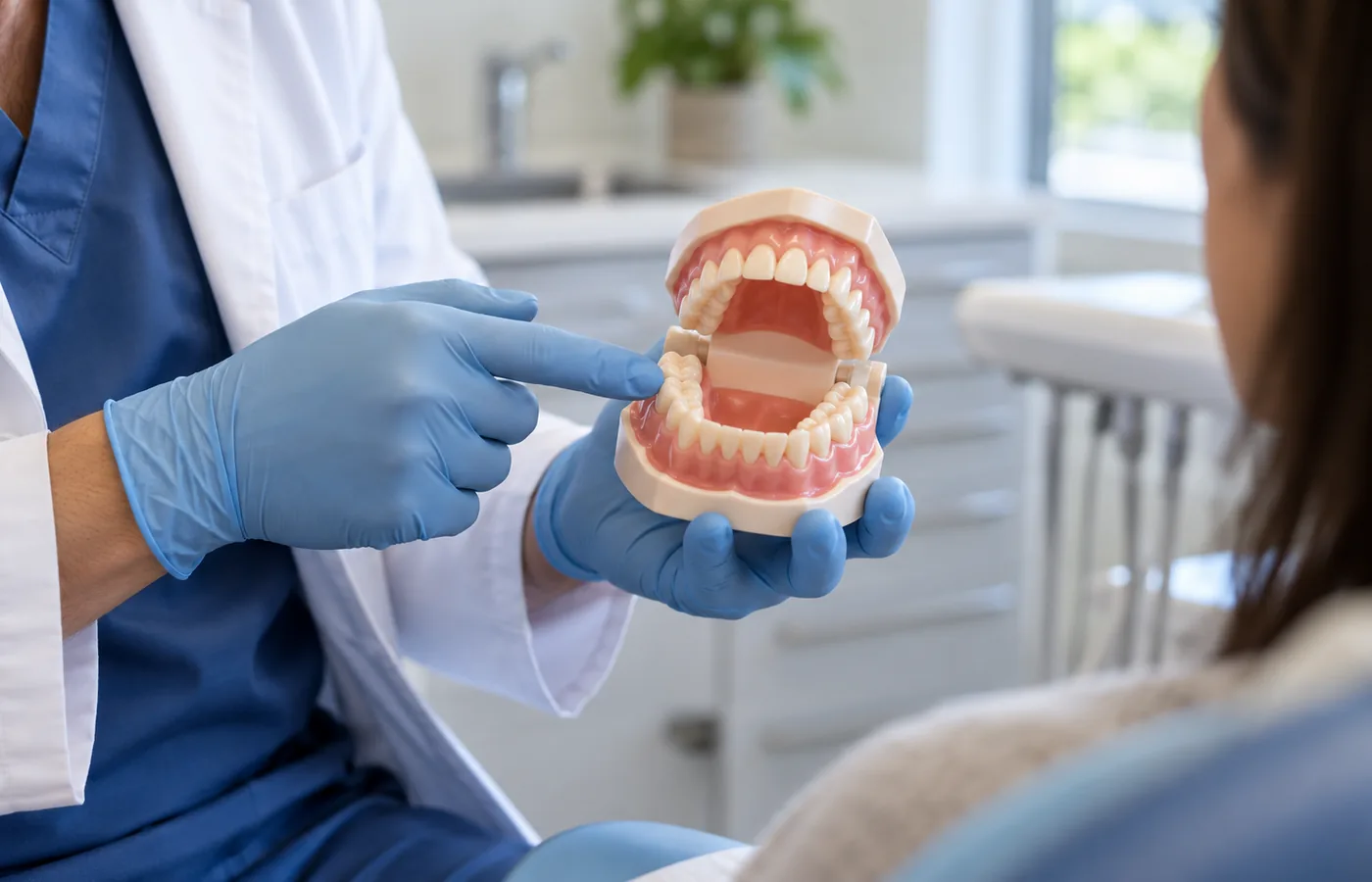
1. Incisors: The Front Teeth
Incisors are the teeth at the very front of your mouth.
Adults normally have eight incisors, with four in the upper jaw and four in the lower jaw.
They are divided into two groups:
- Central incisors: The two middle teeth in each jaw.
- Lateral incisors: The teeth immediately beside the central incisors.
What Do Incisors Do?
Incisors have relatively thin cutting edges that help you bite into food.
When you bite into an apple or sandwich, your incisors are usually the first teeth to make contact.
They also contribute to speech, particularly when producing sounds that involve contact between the tongue, lips and teeth.
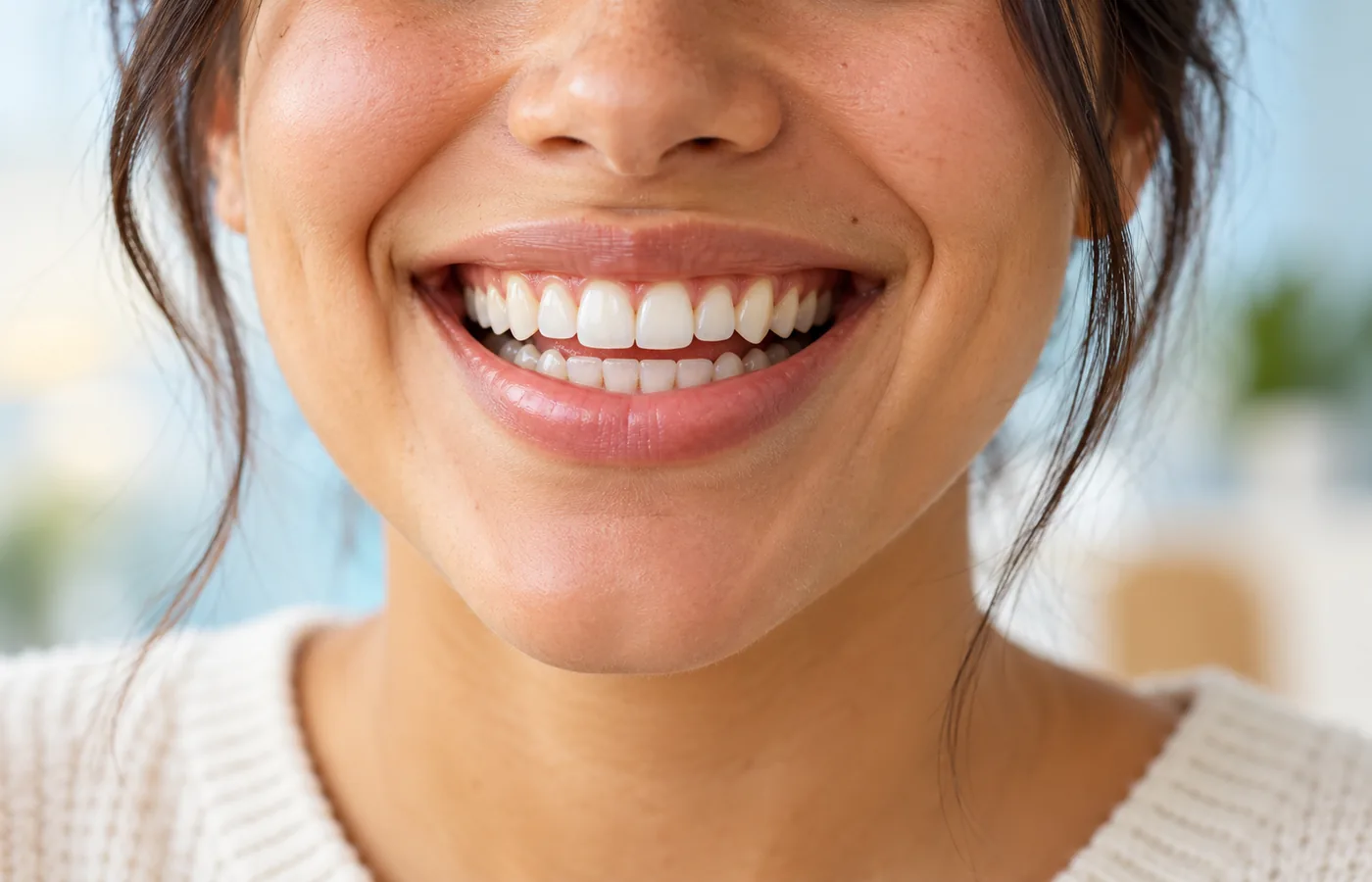
Because incisors are positioned at the front of the mouth, they are among the most visible teeth when you smile.
Common Problems Affecting Incisors
Their position makes incisors more exposed to injuries, particularly during falls or contact sports.
They may also develop chips, wear, decay or discolouration.
If a front tooth develops a crack, becomes loose after an injury or changes colour unexpectedly, a dentist can assess whether treatment is necessary.
2. Canines: The Pointed Teeth
Canines are the pointed teeth immediately beside your lateral incisors.
Adults normally have four canines, two in the upper jaw and two in the lower jaw.
They are sometimes called cuspid teeth, eye teeth or fang teeth.
The pointed tip of a canine is known as a cusp.
What Do Canine Teeth Do?
Canines are designed to grip and tear food.
Their shape helps you pull apart foods that cannot easily be cut using your incisors alone.
Canines also contribute to how your upper and lower teeth come together and move against each other during chewing.
Why Are Some Canine Teeth Sharper Than Others?
Canine shape varies naturally between people.
Some people have noticeably long or pointed canines, while others have more rounded tips.
Having sharp canine teeth does not automatically indicate a dental problem.
However, a canine that suddenly develops a sharp or rough edge may be chipped or worn.
If you’re concerned about unusually pointed teeth, read our guide on why canine teeth are sharp and how they can be reshaped.
3. Premolars: The Teeth Between Canines and Molars
Premolars sit immediately behind the canine teeth.
A full set of adult teeth contains eight premolars, with two on each side of the upper and lower jaws.
They are also called bicuspids, although the number of raised cusps can vary between individual premolar teeth.
Premolars have a broader chewing surface than incisors and canines.
What Do Premolars Do?
Premolars help tear, crush and grind food.
They provide a transition between the pointed canines and the larger chewing surfaces of the molars.
For example, after your front teeth bite into a piece of food, the premolars can help break it into smaller pieces before further chewing.
Do Children Have Premolars?
No. Premolars are only found in the permanent set of teeth.
This is an important difference between adult and baby teeth.
As children grow, their baby molars eventually fall out and are replaced by permanent premolars.
The permanent molars, however, emerge further back in the mouth rather than directly replacing baby teeth.
We’ll explain this distinction in more detail below.
4. Molars: The Back Teeth
Molars are the large teeth positioned at the back of your mouth.
Their broad chewing surfaces have raised cusps and grooves that help break down food.
A full adult set contains 12 molars, with three on each side of the upper and lower jaws.
They are known as:
- First molars
- Second molars
- Third molars, commonly called wisdom teeth
What Do Molars Do?
Molars are responsible for much of the grinding and chewing that prepares food for swallowing.
Their large surfaces make them particularly useful for breaking down firmer and more fibrous foods.
They work with your jaw muscles to apply the pressure needed during chewing.
Are Wisdom Teeth Also Molars?
Yes. Wisdom teeth are the third molars.
They are not a separate fifth type of tooth.
According to Healthdirect Australia, wisdom teeth usually appear between the ages of approximately 18 and 25, although not everyone develops them or has them emerge through the gums.
Some people have all four wisdom teeth, some have fewer, and others have none.
Wisdom teeth do not automatically need to be removed. A dentist will assess their position, health and whether they are causing or likely to cause problems.
How Many Teeth Do Adults and Children Have?
Adults and children have different numbers and arrangements of teeth.
Most people develop two sets during their lifetime: primary teeth and permanent teeth.
| Tooth type | Baby teeth | Adult teeth |
|---|---|---|
| Incisors | 8 | 8 |
| Canines | 4 | 4 |
| Premolars | 0 | 8 |
| Molars | 8 | 12, including wisdom teeth |
| Total | 20 | 32 |
These are the standard numbers for complete sets of teeth. Individual tooth counts can vary.
Baby Teeth
Baby teeth, also called primary, deciduous or milk teeth, usually begin appearing at around six months of age.
Children generally have all 20 baby teeth by approximately three years old.
These teeth help children chew food, develop speech and maintain space for the permanent teeth.
According to Victoria’s Better Health Channel guide to children’s tooth development, baby teeth usually start falling out around six or seven years of age.
The timing varies between children.
Permanent Teeth
Permanent teeth generally begin appearing at around six years of age.
Over several years, they gradually replace baby teeth, while additional molars emerge further back in the jaws.
Many children have a mixture of baby and permanent teeth between approximately six and twelve years of age.
Wisdom teeth, when present, typically emerge much later.
If your child’s teeth seem to be appearing unusually early, late or in an unexpected position, a dentist can assess whether their development is progressing normally.
Why Don’t Adult Molars Replace Baby Molars?
This is one of the more confusing parts of tooth development.
Despite their similar names, baby molars are generally replaced by adult premolars, not adult molars.
The permanent molars emerge behind the existing teeth as the jaws develop.
For example, the first permanent molars often emerge around six years of age, behind the last baby molars.
They may appear before some baby teeth have fallen out.
This means a child can develop new adult teeth at the back of the mouth without losing a baby tooth first.
The Australian Dental Association’s tooth anatomy guide explains this difference between the primary and permanent sets of teeth.
It is worth remembering because newly erupted permanent molars need careful brushing even when a child still has many baby teeth.

What Are the Different Parts of a Tooth?
Although incisors, canines, premolars and molars look different, they share the same basic structure.
Crown and Root
The crown is the visible part of the tooth above the gumline.
The root sits beneath the gums and helps anchor the tooth within the jawbone.
Different types of teeth can have different numbers of roots.
Incisors and canines generally have one root. Premolars can have one or two, while molars commonly have two or three, depending on their position.
Enamel
Enamel is the hard outer layer covering the crown.
It protects the more sensitive tissues underneath.
Enamel can lose minerals during the early stages of tooth decay, and fluoride can help support remineralisation. However, enamel that has been physically lost through a chip or substantial wear does not grow back.
Dentine
Dentine sits beneath the enamel.
It contains microscopic tubules that can transmit sensations towards the tooth’s nerve tissue.
Exposed dentine can contribute to sensitivity when consuming hot, cold or sweet foods.
Dental Pulp
The pulp is the soft tissue inside the tooth containing nerves and blood vessels.
When decay or damage reaches the pulp, it can cause inflammation or infection.
Our article on whether tooth decay can be reversed explains the difference between early enamel changes and cavities that require dental treatment.
How Do Dentists Identify Individual Teeth?
Dentists often use numbers to identify specific teeth in dental records and treatment plans.
In Australia, the FDI two-digit tooth numbering system is commonly used.
The first digit identifies the part of the mouth, while the second identifies the tooth’s position when counting from the centre towards the back.
For permanent teeth:
| First digit | Location |
|---|---|
| 1 | Upper right |
| 2 | Upper left |
| 3 | Lower left |
| 4 | Lower right |
The second digit runs from 1 for the central incisor to 8 for the wisdom tooth.
For example:
- 11: Upper right central incisor
- 23: Upper left canine
- 36: Lower left first molar
These positions refer to the patient’s right and left, not the direction someone sees when looking at you.
NSW Health’s dental clinical guidance explains how the tooth-numbering system is used to identify permanent and primary teeth.
You do not need to memorise the numbers. But knowing them can make a dental treatment plan or quote easier to understand.
Do Different Types of Teeth Need Different Care?
All teeth need regular cleaning, but their different shapes can create different cleaning challenges.
Front teeth have relatively smooth surfaces that are generally easier to reach with a toothbrush.
Premolars and molars have grooves and pits on their chewing surfaces where plaque and food debris can collect.
The spaces between teeth can also be difficult to clean with a toothbrush alone.
The fundamentals of good oral hygiene remain the same:
- Brush twice daily using fluoride toothpaste and a soft toothbrush.
- Clean between your teeth daily using floss or another suitable interdental cleaning method.
- Pay attention to the back molars and the area along the gumline.
- Limit frequent exposure to sugary foods and drinks.
- Have dental check-ups based on your individual needs.
Tooth shape is also relevant if you grind or clench your teeth, which can contribute to wear and damage over time.
You can learn more in our guide to teeth grinding treatments in Australia.
Frequently Asked Questions
What Are the Four Different Types of Human Teeth?
The four types are incisors, canines, premolars and molars.
Incisors cut food, canines tear it, premolars crush and grind it, and molars perform much of the heavy chewing.
How Many Types of Teeth Do Children Have?
Children have three types of baby teeth: incisors, canines and molars.
They do not have premolars until their permanent teeth begin developing and emerging.
What Are the Sharpest Teeth Called?
Canines are generally the most pointed teeth.
They sit beside the incisors and help grip and tear food.
What Are the Teeth Next to Canines Called?
The teeth immediately behind the canines are premolars in the permanent set of teeth.
The teeth immediately in front of the canines are lateral incisors.
What Are the Big Teeth at the Back Called?
They are called molars.
Molars have broad chewing surfaces designed to grind and break down food.
Are Wisdom Teeth a Different Type of Tooth?
No. Wisdom teeth are third molars, making them part of the molar group.
They are usually the last permanent teeth to develop and emerge.
Is It Normal to Have 28 Teeth Instead of 32?
Yes. Many adults have 28 permanent teeth because they do not have all four wisdom teeth in their mouth.
Some wisdom teeth never develop, some remain unerupted and others are removed.
A dentist can assess whether any missing or unerupted teeth need attention.
Which Teeth Do Not Fall Out?
Permanent teeth are not normally expected to fall out as part of natural tooth development.
Baby teeth are gradually lost and replaced by permanent teeth, although permanent molars emerge behind the baby teeth rather than replacing them.
If a permanent tooth becomes loose, arrange a dental assessment.
Understanding Your Teeth
The different types of teeth work together every time you eat.
Incisors cut food, canines help tear it, premolars crush it and molars grind it into smaller pieces.
Their shapes also explain why teeth can look different, why the front and back teeth may experience different kinds of wear, and why children have a different arrangement from adults.
You don’t need to know every dental term to look after your teeth. But understanding the basic differences can make it easier to follow your dentist’s advice, understand treatment options and recognise changes worth checking.
Sources and Further Reading
- Australian Dental Association: Tooth Anatomy and Types of Teeth
- Healthdirect Australia: Mouth and Teeth
- Better Health Channel: Teeth Development in Children
- NSW Health: Dental Emergencies and Tooth Identification
This information is for general educational purposes and does not replace personalised advice from a registered dental professional.