
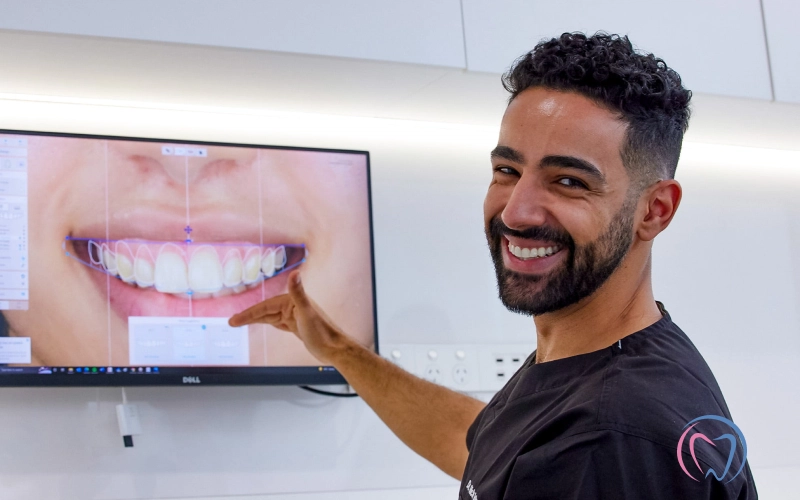
Composite veneers are often described as lasting around 5 to 7 years, although some need attention sooner and others remain in good condition for much longer. Their actual lifespan depends on the material, how the veneers were placed, your bite, everyday habits and ongoing dental care.
Unlike natural tooth enamel, composite resin can gradually develop surface stains, wear or small chips. However, this does not always mean the entire veneer needs replacing.
One of the advantages of composite veneers is that minor problems can sometimes be corrected through professional polishing or repair.
If you already have composite veneers, or you’re considering them, it helps to understand what affects their longevity and how to recognise when maintenance is needed.
How Long Do Composite Veneers Last According to Research?
There is no scientifically established expiry date for composite veneers.
A commonly quoted lifespan of around 5 to 7 years can be useful for planning, but it should not be treated as a promise that every veneer will last that long or need replacing at that point.
Clinical studies provide a more useful picture.
A 2023 systematic review published in the Journal of Evidence-Based Dental Practice examined seven studies of composite resin veneers.
The researchers reported an overall pooled survival rate of 88% from the randomised controlled trials, with average follow-up periods ranging from 24 to 97 months.
However, that figure does not mean every patient has an 88% chance of their veneers lasting exactly five or eight years. The studies used different follow-up periods and reported different complications.
The most commonly reported problems included surface roughness, colour changes and discolouration around veneer edges.
A separate 10-year clinical study published in Dental Materials evaluated 1,459 composite and ceramic veneers.
The study found that composite veneers generally required more repairs and replacements than ceramic veneers, although many remained functional over time.
The takeaway is straightforward: composite veneers can provide years of service, but maintenance is part of their long-term care.
What Does It Actually Mean for a Composite Veneer to Last?
One detail often overlooked in lifespan comparisons is the difference between a veneer remaining attached and a veneer remaining in perfect condition.
A composite veneer might still be firmly bonded to the tooth after several years but have some staining or minor wear.
Another veneer might need a small repair after a chip and continue functioning for several more years.
Neither situation necessarily means the entire restoration has failed.
Three Ways to Think About Veneer Longevity
| Measure | What it means | Why it matters |
|---|---|---|
| Survival | The veneer remains in place and functional | It may still need maintenance |
| Appearance | The veneer continues to look acceptable | Staining or surface wear can affect appearance before complete failure |
| Maintenance | The veneer needs polishing or repair | Minor intervention may extend its useful service life |
This distinction helps explain why two people can report very different experiences with composite veneers.
One person may have needed no treatment for years, while another may have attended several polishing appointments without ever needing full replacement.
What Are Composite Veneers Made From?
Composite veneers are made from tooth-coloured composite resin, a material also used for white dental fillings.
The resin is usually applied directly to the front surface of the tooth, shaped by the dentist and hardened using a curing light.
The final surface is then finished and polished.
According to the Australian Dental Association, direct composite veneers can often be completed in a single appointment.
They may be used to improve the appearance of:
- Chipped or worn front teeth
- Small gaps
- Uneven tooth edges
- Certain tooth shape concerns
- Some types of discolouration
Composite veneers can often be placed with relatively little removal of natural tooth structure, although this depends on the individual case.
For a broader explanation of veneer materials and treatment options, read our guide to dental veneers and what you need to know before treatment.
What Affects How Long Composite Veneers Last?
The quality of the material matters, but it is only one factor.
The way your teeth meet, how you use them and the health of the underlying teeth can all influence how veneers perform.
Teeth Grinding and Clenching
Grinding or clenching places repeated pressure on teeth and restorations.
Over time, this can contribute to worn edges, chips or fractures in composite resin.
If you grind your teeth while sleeping, your dentist may recommend a custom-made night splint to help protect your teeth and restorations.
However, a splint does not necessarily stop the grinding itself.
Our article on teeth grinding treatments in Australia explains the available management options.
Your Bite and Tooth Position
Some teeth experience greater pressure than others during chewing and jaw movement.
For example, a composite veneer placed on a front tooth that regularly contacts the opposing teeth under heavy pressure may be more vulnerable to wear or chipping.
Your dentist should assess how your teeth meet before placing veneers.
In some situations, other dental treatment may need to be considered first.
Eating Habits
Composite resin is designed to withstand normal everyday use, but it can still be damaged by excessive force.
Frequently biting into very hard objects or using your front teeth to break open packaging can increase the risk of chipping.
This does not mean you need to avoid all firm foods permanently.
The more useful precaution is to avoid placing unnecessary pressure on veneer edges.
Staining From Food, Drinks and Smoking
Composite resin is generally more prone to surface staining and gradual colour changes than porcelain.
Frequent exposure to coffee, tea, red wine and tobacco may contribute to visible discolouration over time.
Some staining can be reduced through professional polishing, but not every colour change can be removed.
The condition of the composite surface also matters. A rough or worn surface may collect stains more readily.
Oral Hygiene and Gum Health
A veneer covers part of the tooth, but it does not make the underlying tooth immune to decay.
Plaque can still accumulate around the margins where the composite meets natural tooth structure.
Poor oral hygiene can lead to gum inflammation or decay around these areas.
The Australian Dental Association recommends brushing twice daily with fluoride toothpaste and cleaning between your teeth every day, including when you have veneers.
The Quality of the Restoration
How a veneer is designed, bonded, shaped and polished can affect its performance.
The condition of the underlying enamel, the amount of composite used and the way the veneer meets neighbouring teeth are also important.
This is why a personalised assessment matters more than relying on a standard lifespan estimate.
How to Make Composite Veneers Last Longer
You cannot guarantee that a veneer will never chip or wear, but several everyday habits can help reduce avoidable damage.
1. Brush and Floss Consistently
Brush twice daily using fluoride toothpaste and a soft toothbrush.
Clean between your teeth every day using floss or another suitable interdental cleaning method.
Pay particular attention to the gumline and the edges where the veneer meets the tooth.
A dentist can advise whether your existing toothpaste and cleaning products are suitable for your restorations.
2. Avoid Using Your Teeth as Tools
Do not use your veneers to open packaging, bite fingernails, hold objects or chew pens.
These activities place unnecessary pressure on the edges of your front teeth.
Also be cautious when biting directly into very hard foods.
Cutting firm foods into smaller pieces may be more comfortable if your dentist has advised you to protect particular teeth.
3. Discuss Teeth Grinding With Your Dentist
If you wake up with a sore jaw, notice tooth wear or have been told that you grind your teeth, mention this during your dental appointment.
Your dentist can assess whether grinding may be affecting your veneers.
A protective appliance may be recommended when appropriate.
4. Manage Staining
You do not necessarily need to stop drinking coffee or tea because you have composite veneers.
However, being aware of frequent staining exposure can help you manage their appearance.
Rinsing your mouth with plain water after staining drinks may help clear residues.
Avoid trying to remove stains by aggressively scrubbing the veneers or using abrasive home whitening methods.
Professional polishing is a safer option when surface staining becomes noticeable.
5. Attend Dental Reviews
Dental reviews allow your dentist to examine the condition of your veneers and surrounding teeth.
They may identify small chips, rough edges, staining or changes to your bite before these become larger problems.
Your dentist can recommend an appropriate review and maintenance schedule based on your oral health.
Can Composite Veneers Be Repaired Instead of Replaced?
Yes. Repairability is one of the important advantages of composite veneers.
If a composite veneer develops a small chip, rough edge or localised defect, a dentist may be able to repair it by adding new composite resin and polishing the surface.
However, not every damaged veneer can be repaired successfully.
The decision depends on the extent of the damage, the condition of the existing restoration and the health of the underlying tooth.
When Might Polishing, Repair or Replacement Be Needed?
| What you notice | Possible solution | What to consider |
|---|---|---|
| Mild surface staining | Professional polishing | May improve the appearance without replacing the veneer |
| Surface feels slightly rough | Finishing and polishing | A dentist should check whether the roughness is superficial |
| Small chip at the edge | Composite repair | Possible when there is enough sound material to support the repair |
| Repeated chipping | Bite assessment and possible redesign | The underlying pressure or tooth position may need attention |
| Significant discolouration | Polishing, repair or replacement | Depends on how deeply the colour has changed |
| Large fracture or loose veneer | Repair or replacement | A dentist needs to assess the tooth and remaining restoration |
| Decay around the veneer | Treatment of the underlying tooth | Cosmetic repair alone may not address the problem |
These are general possibilities rather than guaranteed treatments.
A clinical examination is needed to determine the appropriate approach.
How Do You Know When Composite Veneers Need Replacing?
Composite veneers do not automatically need replacing when they reach five or seven years old.
If they remain comfortable, functional and in acceptable condition, a dentist may recommend continued monitoring.
Replacement may become necessary when the restoration is significantly damaged, repeatedly fails or can no longer be maintained satisfactorily.
Signs worth discussing with your dentist include:
- A veneer that feels loose or moves
- Significant chipping or cracking
- An edge that repeatedly catches your tongue
- Noticeable gaps developing around the restoration
- Persistent sensitivity or pain
- Staining that cannot be adequately corrected
- Repeated repairs that do not last
A change in appearance does not always mean that replacement is the only option.
Likewise, a veneer that still looks acceptable may need treatment if decay or another problem develops underneath it.
What if a Composite Veneer Falls Off?
Keep any detached material if you can retrieve it safely and contact your dentist.
Avoid attempting to glue the veneer back onto your tooth yourself.
Household adhesives are not suitable for dental repairs, and the tooth may need to be checked for damage or decay before it can be restored.
If the exposed tooth is sharp or sensitive, avoid chewing on that side until you receive advice.
Do Composite Veneers Last as Long as Porcelain Veneers?
Porcelain veneers generally demonstrate better long-term durability and colour stability than composite veneers, but this does not automatically make them the right choice for everyone.
The 2022 long-term clinical study comparing composite and ceramic veneers found better longevity for ceramic veneers, with fewer repairs and replacements.
However, composite veneers can offer advantages in certain situations, particularly when a relatively conservative and repairable restoration is appropriate.
Composite vs Porcelain Veneers
| Consideration | Composite veneers | Porcelain veneers |
|---|---|---|
| Typical lifespan discussed in patient guidance | Often around 5 to 7 years, sometimes longer | Often around 10 to 15 years, sometimes longer |
| Material | Tooth-coloured composite resin | Dental ceramic |
| Stain resistance | More prone to surface staining | Generally more stain-resistant |
| Minor repairs | Often possible using additional composite | Repairs can be more complicated |
| Appointments | Direct veneers often completed in one visit | Usually require multiple visits |
| Cost | Generally lower initial cost | Generally higher initial cost |
| Tooth preparation | May require little or no enamel removal | May require enamel preparation depending on the case |
These are general differences, not guaranteed outcomes.
The amount of healthy tooth structure involved, the condition of your bite and your treatment goals should all influence the decision.
Porcelain may be appropriate for someone seeking a longer-lasting cosmetic restoration, while composite may be suitable when repairability or a more conservative approach is important.
Neither treatment is maintenance-free.
Are Composite Veneers Worth It if They Need Maintenance?
That depends on your expectations, oral health, budget and reasons for considering treatment.
Composite veneers may be suitable for someone who wants to improve minor chips, gaps or uneven edges without committing to a more extensive restoration.
However, the initial cost should not be your only consideration.
It is also worth thinking about the possibility of future polishing, repairs and eventual replacement.
Consider the Long-Term Cost, Not Just the Initial Quote
Imagine two treatment plans:
Plan A: A lower initial cost, but the restoration may need occasional polishing or repairs over time.
Plan B: A higher initial cost, but potentially greater long-term resistance to wear and staining.
Neither plan is automatically better.
The most appropriate choice depends on the extent of treatment, your oral health and what you value most.
When asking for a quote in Australia, consider asking:
- How much natural enamel will need to be removed?
- How long are the veneers expected to last in my situation?
- What maintenance might be required?
- Are polishing and repairs included in the initial fee?
- What happens if a veneer chips?
- How much might replacing a veneer cost later?
- Are there less invasive alternatives?
Private health insurance may not cover treatment performed purely for cosmetic reasons. Check your policy and obtain an itemised quote before committing.
Can You Whiten Composite Veneers When They Become Stained?
Whitening products do not change the colour of composite resin in the same way they can lighten natural tooth structure.
If composite veneers become stained, professional polishing may improve some surface discolouration.
However, deeper changes in the resin’s colour may require repair or replacement.
There is another consideration if you want your natural teeth to become whiter.
Your veneers will not automatically change shade to match newly whitened teeth.
This can leave a visible difference between the composite and the surrounding enamel.
If you are considering teeth whitening and veneers, discuss the order of treatment and shade matching with your dentist.
Are Composite Veneers Suitable for Everyone?
Not necessarily.
Composite veneers may be appropriate for certain cosmetic concerns, but they do not correct every underlying dental problem.
For example, someone with significant crowding or bite misalignment may need orthodontic assessment rather than veneers alone.
Veneers can alter the visible shape of teeth, but they do not move the roots or correct the position of the jaws.
Our guide to teeth straightening options explains the different orthodontic approaches and why treatment suitability varies.
Untreated decay, active gum disease or significant grinding problems may also need attention before cosmetic veneers are considered.
A dentist should explain whether composite veneers, porcelain veneers, bonding, whitening, orthodontic treatment or no treatment is appropriate for your situation.
Frequently Asked Questions
Can Composite Veneers Last 10 Years?
Yes. Some composite veneers can remain functional for 10 years or longer.
However, this is not guaranteed, and they may need maintenance or repairs during that time.
The condition of the veneers, the teeth underneath them and the person’s bite all influence longevity.
Do Composite Veneers Need Replacing Every Five Years?
No.
Five years is not an automatic replacement deadline.
Some veneers need attention sooner, while others remain in acceptable condition well beyond that point.
A dentist should assess whether polishing, repair, replacement or continued monitoring is appropriate.
Do Composite Veneers Stain Over Time?
They can.
Composite resin is more susceptible to surface staining and colour changes than porcelain.
The extent of discolouration depends on factors such as the material, surface condition, diet, smoking and maintenance.
Some staining may improve with professional polishing.
Can Composite Veneers Chip Easily?
Composite veneers can chip, particularly when exposed to excessive bite forces or habits such as chewing hard objects.
However, they are designed to withstand normal function when appropriately placed.
Minor chips can sometimes be repaired without replacing the entire veneer.
Can You Brush and Floss Composite Veneers Normally?
Yes.
You should continue brushing twice daily with fluoride toothpaste and cleaning between your teeth every day.
The natural teeth beneath and around veneers can still develop decay and gum disease.
Does Teeth Grinding Shorten the Life of Composite Veneers?
Grinding or clenching can increase pressure on teeth and restorations, potentially contributing to wear, cracks and chips.
If you grind your teeth, your dentist may recommend a protective appliance or other management.
Can Composite Veneers Be Removed?
Composite resin can often be removed or modified by a dentist, but the outcome depends on how the tooth was originally prepared and bonded.
If natural enamel was removed during the procedure, that enamel will not grow back.
Do not assume that every composite veneer treatment is completely reversible.
Do Composite Veneers Damage Natural Teeth?
Composite veneers do not automatically damage healthy teeth, but treatment can involve changing the natural tooth surface.
Poorly maintained restorations can also develop problems around their edges.
The amount of tooth preparation, bonding technique and ongoing oral hygiene all matter.
What Happens When Composite Veneers Wear Out?
A dentist may be able to polish or repair the restoration if the problem is minor.
More extensive damage, repeated failure or decay around the veneer may require replacement or another form of treatment.
The next step depends on the condition of both the veneer and the natural tooth.
Making Composite Veneers Last
Composite veneers can provide several years of improvement to the appearance of your teeth, but they are not permanent, maintenance-free restorations.
Their lifespan is influenced by your bite, the way they were placed, everyday habits and how well the surrounding teeth and gums are maintained.
Minor chips or staining do not always mean you need completely new veneers. In some situations, professional polishing or repair can extend their useful life.
If you already have composite veneers, regular dental reviews can help identify problems early.
If you’re considering treatment, ask your dentist what lifespan is realistic for your teeth, what future maintenance may involve and whether composite is the most suitable option for your goals.
Sources and Further Reading
- Australian Dental Association: Crowns, Bridges and Veneers
- Lim et al., 2023: Survival and Complication Rates of Resin Composite Laminate Veneers
- Mazzetti et al., 2022: 10-Year Practice-Based Evaluation of Ceramic and Direct Composite Veneers
This article is for general educational purposes and does not replace personalised advice from a registered dental professional. The lifespan and suitability of dental veneers vary between individuals.