
If your dental implant feels loose, the problem may be with the crown, the connecting screw or the implant fixture embedded in your jawbone. A loose crown or screw can sometimes be repaired without replacing the implant, but movement of the implant fixture itself is more serious and may indicate implant failure.
Dental implants are designed to remain stable during normal biting and chewing. A new clicking sensation, noticeable movement or sudden change in how an implant tooth feels should not be ignored, even if there is no pain.
What should you do if your dental implant feels loose? Contact your dentist promptly, avoid chewing on the affected implant and do not attempt to tighten or reposition it yourself. If you also have significant pain, swelling, pus or fever, seek urgent dental assessment. Only a professional examination can determine which part is loose and whether it can be repaired.
The important distinction is that a loose implant tooth does not always mean the implant inside the jawbone has failed.
What Does It Mean When a Dental Implant Feels Loose?
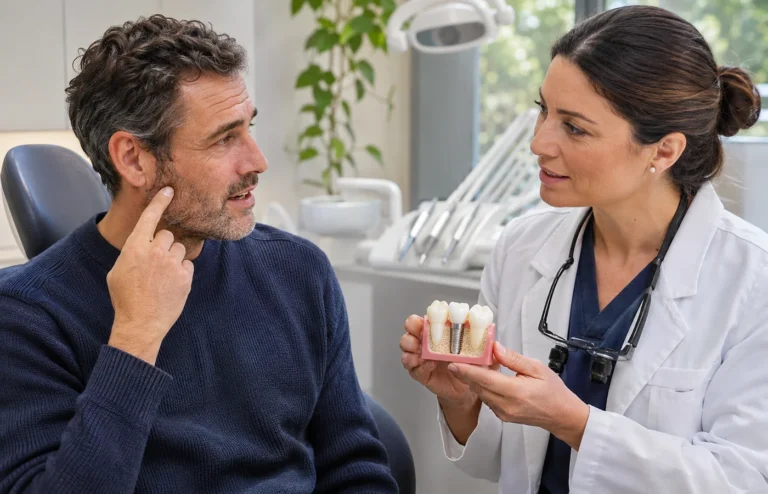
A dental implant restoration usually has three main components:
- Implant fixture: The metal or ceramic component surgically placed into the jawbone, where it acts as an artificial tooth root.
- Abutment: The connector between the implant fixture and the replacement tooth.
- Crown: The visible replacement tooth attached to the abutment or directly to the implant system.
Some restorations use screws to secure the components, while others use dental cement to retain the crown.
The US Food and Drug Administration’s guide to dental implants explains the different components and identifies both abutment screw loosening and implant-body failure as possible complications. When you notice movement, any of these components could be involved.
Loose Implant Crown vs Loose Implant Fixture
| What may be loose | What it means | Possible treatment |
|---|---|---|
| Crown | The visible replacement tooth is no longer securely attached | Reattachment, repair or replacement |
| Abutment or connecting screw | A component joining the crown to the implant has loosened or become damaged | Professional tightening, component replacement or other repair |
| Implant fixture | The implant embedded in the bone has lost stability | Assessment for implant failure, often requiring removal if the fixture is genuinely mobile |
| Fixed implant bridge | A bridge or component connecting it to one or more implants is moving | Assessment of the bridge, screws and each supporting implant |
These problems cannot be reliably distinguished by how the tooth feels at home. Even if the crown appears to be the only moving part, a dentist needs to check the implant connection and surrounding tissues.
What Are the Symptoms of a Loose Dental Implant?
A loose implant may cause noticeable movement, but the symptoms are not always obvious. Some people experience discomfort while chewing, while others notice a clicking sensation without any pain. Signs that deserve assessment include:
- A dental implant crown that moves or wobbles
- Clicking when biting or chewing
- A sudden change in how your teeth meet
- A crown that feels higher or differently positioned
- Pain or pressure around the implant when chewing
- A visible gap between the crown and gumline
- A crown or bridge that appears to have shifted
- Redness, swelling or bleeding around the implant
- Pus, an unpleasant taste or persistent bad breath
Not every symptom means that the implant fixture has failed. For example, a clicking sensation may come from a loosened prosthetic component. However, the absence of pain does not mean a loose implant is safe to leave untreated. Mechanical problems can worsen even when the surrounding gums appear healthy.
Can a Dental Implant Be Loose Without Pain?
Yes. A loose connecting screw or crown may produce movement without significant discomfort. Implants also differ from natural teeth because they do not have a periodontal ligament with the same sensory properties. This means you should not rely on pain alone to determine whether an implant is stable or healthy.
If you notice new movement, arrange a professional examination.
What Causes a Dental Implant to Become Loose?
The causes generally fall into two categories: mechanical problems involving the restoration and biological problems affecting the implant’s supporting tissues.
1. Loose Implant Crown or Abutment Screw
A loosened connecting screw is one possible reason an implant tooth begins moving. During everyday chewing, repeated forces pass through the crown and its connecting components. Over time, a screw can lose its secure connection. Contributing factors may include:
- Repeated chewing forces
- Teeth grinding or clenching
- Uneven pressure on the implant
- Problems involving the fit of the components
- Wear or damage to the screw
- Previous mechanical complications
A loosened screw does not automatically mean that the implant has lost its attachment to the jawbone. The Canadian Dental Association’s clinical discussion of loose implant abutment screws explains that these problems can involve crown movement, changes in the bite and sometimes discomfort.
A dentist may be able to correct the issue without replacing the implant fixture. However, leaving a loose connection untreated can increase the risk of further damage.
2. Loss of Cement Retention
Some implant crowns are secured to an abutment using dental cement. If the cement bond fails, the crown may become loose or detach while the implant underneath remains stable. This is different from the implant fixture moving within the bone. Depending on the crown’s condition, the dentist may be able to clean and reattach it.
However, the restoration must be assessed before it can be safely reused. Do not try to glue it back using household adhesives.
3. Peri-Implantitis and Bone Loss
Peri-implantitis is a condition involving inflammation and progressive bone loss around a dental implant. Over time, the loss of supporting bone may threaten the implant’s stability.
According to the European Federation of Periodontology, warning signs of peri-implant disease can include bleeding, swollen gums, bad breath and changes around the implant. The condition may develop without significant pain, particularly in its earlier stages.
If sufficient bone support is eventually lost, the implant fixture can become mobile. At that point, removing the failed implant may be necessary. Importantly, peri-implantitis can begin long before an implant becomes loose. Early signs such as bleeding and persistent gum inflammation should therefore be assessed rather than waiting for movement to develop.
4. Failure to Integrate With the Jawbone
After implant surgery, the surrounding bone gradually connects with the implant surface. This process is called osseointegration. If the implant does not achieve adequate integration, it may fail to develop the stability needed for long-term function. Possible contributing factors include:
- Problems during healing
- Infection
- Insufficient initial stability
- Excessive loading during healing
- Smoking
- Certain medical conditions
This does not mean that every person with one of these risk factors will experience implant failure. A dental professional must assess the actual cause.
5. Excessive Bite Forces and Teeth Grinding
Grinding or clenching can place additional stress on implant crowns, screws and other restorations. This may increase the risk of mechanical complications in some patients. For example, repeated heavy forces may contribute to screw loosening, wear or fractures. A dentist may assess your bite and recommend a protective appliance when appropriate.
However, a night guard cannot repair a loose implant or reverse bone loss. If grinding is a concern, our guide to teeth grinding treatments in Australia explains the available management approaches.
6. Damaged or Fractured Implant Components
A crown, screw, abutment or, less commonly, the implant fixture itself may become damaged. Damage can result from excessive forces, accidents, material fatigue or other mechanical factors. The appropriate repair depends on which component has fractured and whether the implant connection remains intact. Some problems can be managed by replacing a component.
Others may require a new restoration or further treatment.
What Should You Do if Your Dental Implant Is Loose?
If you notice movement in an implant-supported tooth, avoid trying to identify the loose component by repeatedly pushing it. Instead, take practical steps to reduce the risk of further damage.
Step 1: Contact Your Dentist Promptly
Arrange an assessment rather than waiting for your next routine appointment. Explain whether the implant is moving, clicking, painful or associated with swelling. If possible, contact the dentist who placed or restored the implant because they may already have information about the implant system and its components.
However, another appropriately experienced dentist may also be able to assess the problem.
Step 2: Avoid Chewing on the Affected Implant
Try to chew on the opposite side of your mouth until the implant has been assessed. Choose foods that do not require forceful chewing. Avoid biting directly on the loose restoration, particularly if it feels unstable. Continued loading may worsen an existing mechanical problem.
Step 3: Do Not Attempt to Tighten the Implant Yourself
Never try to tighten a loose implant crown or connecting screw at home. Dental implant systems use specialised components and instruments. Trying to turn, pull or reposition a loose restoration may damage the screw, implant connection or surrounding tissues. Do not use pliers, household tools or dental adhesives.
Step 4: Continue Gentle Oral Hygiene
Keep the surrounding area clean without aggressively brushing or manipulating the loose component. Follow any specific instructions from your treating dentist. If the gums are swollen or painful, ask your dentist whether your usual cleaning routine needs temporary modification.
Avoid relying on mouthwash or salt water rinses to resolve the looseness. These products cannot tighten a mechanical connection or restore lost bone support.
What if the Dental Implant Crown Falls Off?
If an implant crown becomes completely detached, keep it in a clean, secure container and contact your dentist. Do not attempt to force it back into position. A detached crown may be reusable, but a dentist needs to check the restoration, abutment and implant before deciding whether it can be reattached. Avoid chewing directly on any exposed components.
If a crown or other part is loose enough to present a risk of being swallowed or inhaled, seek immediate dental advice about safe management. Do not leave an unstable component in place without guidance. If a component is swallowed and you experience choking, breathing difficulty or persistent coughing, seek emergency medical care.
Can a Dentist Tighten a Loose Dental Implant?
A dentist can often tighten a loose implant connecting screw, but they cannot simply tighten an implant fixture that has lost its attachment to the jawbone. This is why identifying the moving component is essential.
If the Crown or Screw Is Loose
The dentist may:
- Examine the restoration and surrounding gums.
- Identify the implant system and connection.
- Access the screw or remove the restoration when appropriate.
- Check the screw, abutment and implant connection for damage.
- Tighten or replace the component using the appropriate equipment.
- Check the bite and ensure the restoration fits securely.
Some crowns can be reused. Others may require repair or replacement, particularly if a screw has fractured or the restoration has been damaged.
If the Implant Fixture Is Loose
Tightening the crown screw will not correct an implant fixture that is genuinely moving in the bone. The dentist needs to assess whether osseointegration has failed or supporting bone has been lost. A mobile implant fixture often cannot be retained and may need to be removed. The treatment options depend on the cause and condition of the surrounding tissues.
How Does a Dentist Diagnose a Loose Dental Implant?
A dental examination aims to identify exactly which part is moving and why. The dentist may use several assessments.
Examination of the Crown and Connecting Components
The dentist checks whether the crown, abutment or bridge moves independently of the implant fixture. They also look for cracks, worn components and changes in the restoration’s fit.
Examination of the Surrounding Gums
The dentist checks for bleeding, inflammation, swelling or discharge. Depending on the circumstances, they may measure the tissues around the implant to assess for signs of peri-implant disease.
Dental X-Rays
Dental X-rays may help the dentist examine the implant’s position, surrounding bone and certain mechanical problems. They can sometimes reveal bone loss or changes around the implant connection. However, not every loose screw or damaged component is clearly visible on an X-ray. Findings need to be interpreted alongside the clinical examination.
Assessment of the Bite
Your dentist may check how the implant crown contacts the opposing teeth. Heavy or uneven contact can contribute to certain mechanical complications. This assessment is particularly important if a crown or screw has loosened repeatedly.
How Are Loose Dental Implants Treated?
Treatment depends on whether the problem is mechanical or involves the surrounding bone and tissues.
| Problem identified | Possible treatment | Can the existing implant stay? |
|---|---|---|
| Loose crown | Reattachment, repair or replacement | Often, if the implant is stable |
| Loose abutment screw | Professional tightening or replacement | Often, if the connection is undamaged |
| Fractured screw or connector | Component retrieval, repair or replacement | Depends on the extent of damage |
| Peri-implant inflammation without fixture mobility | Professional treatment and maintenance | May be possible, depending on the condition |
| Implant fixture moving within the bone | Assessment for implant failure and likely removal | Often not, once genuine fixture mobility is confirmed |
These are general treatment pathways, not guaranteed outcomes.
Can Peri-Implantitis Be Treated Before the Implant Becomes Loose?
Yes, treatment may be possible while the implant remains stable. Management can involve professional plaque and calculus removal, improvements to cleaning techniques and treatment of the inflamed tissues. More advanced cases may require specialist periodontal treatment or surgery. The aim is to control inflammation and prevent further bone loss.
However, treatment cannot guarantee that every affected implant will be preserved.
What if the Implant Needs to Be Removed?
If the implant fixture has failed, removal may be necessary. The dentist then assesses the condition of the surrounding bone and gums. Depending on the circumstances, treatment may involve a healing period, management of infection or inflammation, and sometimes bone grafting. A replacement implant may be possible later, but it is not guaranteed.
Other tooth replacement options may also need to be considered. For more information about the wider procedure, see our dental implants guide for Australian patients.
Is a Loose Dental Implant an Emergency?
A loose dental implant should be assessed promptly, but not every case requires a hospital emergency department. The urgency depends on the symptoms and what has happened.
| Situation | Recommended action |
|---|---|
| Implant crown feels loose but there is no pain | Contact your dentist promptly and avoid chewing on it |
| Crown falls off | Keep the detached crown safe and arrange prompt dental assessment |
| Implant becomes loose after an injury | Seek urgent dental care |
| Implant feels loose with increasing pain | Arrange urgent dental assessment |
| Swelling, pus, fever or worsening gum inflammation | Seek urgent dental or medical assessment |
| Rapidly spreading facial or neck swelling, or difficulty swallowing or breathing | Seek emergency medical care immediately |
In Australia, call 000 for a life-threatening emergency. A loose crown without pain may be less urgent than a spreading infection, but it still requires attention. Delaying treatment can allow a repairable mechanical problem to become more complicated.
Can a Dental Implant Become Loose Years After Placement?
Yes. A dental implant may remain stable for several years before a mechanical or biological complication develops. For example, a screw may gradually loosen, a crown may lose retention or inflammation around the implant may contribute to bone loss. The age of an implant alone does not explain why it has become loose.
A newly placed implant and a restoration fitted many years earlier may require very different assessments.
Loose Implant During the First Few Months
An implant that moves during early healing may not have achieved adequate integration with the surrounding bone. However, a loose healing cap or temporary restoration can also create a sensation of movement. These possibilities should not be confused. Contact the treating dental team if any part of a recently placed implant system becomes loose.
Loose Implant After Several Years
Movement developing years later may involve a worn or loosened component, problems with the restoration or changes in the supporting tissues. Peri-implantitis is one important condition to investigate, particularly when there is bleeding, swelling or bone loss. The correct diagnosis depends on an examination and appropriate imaging.
What if Your All-on-4 Implant Bridge Feels Loose?
Full-arch implant bridges are different from individual implant crowns. An All-on-4 restoration typically uses four implants to support a fixed bridge of replacement teeth. If the bridge begins moving, the problem may involve:
- A loose prosthetic screw
- Damage to the bridge
- A problem with the fit of the restoration
- Complications affecting one or more supporting implants
Movement of the bridge does not automatically mean that all the implants have failed. However, fixed implant bridges should not wobble during normal use.
The American College of Prosthodontists recommends investigating recurring screw loosening and other mechanical complications rather than simply repeating the same repair. Do not attempt to remove or tighten the bridge yourself.
If you’re unsure whether your restoration is designed to be removed, read our guide on whether implant-supported dentures can be removed.
Can You Prevent Dental Implants From Becoming Loose?
Not every complication can be prevented, but good maintenance and early assessment can reduce some risks.
Maintain Good Oral Hygiene
Clean around your dental implants every day using the techniques and products recommended for your restoration. Plaque buildup can contribute to inflammation around the implant. Cleaning requirements differ between single crowns, bridges and implant-supported dentures.
Attend Regular Implant Reviews
Professional examinations allow your dentist to monitor the gums, bite, restoration and supporting bone. Review intervals should be based on your individual needs and risk factors. People with a history of periodontitis or previous implant complications may need additional monitoring.
Address Teeth Grinding
If you grind or clench your teeth, ask your dentist whether it may be affecting your implant restoration. A protective appliance or other management may be appropriate.
Avoid Smoking
Smoking is associated with poorer healing and an increased risk of complications around implants. If you smoke, discuss cessation support with your healthcare professional.
Report Changes Early
Do not wait for severe pain before mentioning a change in your implant. New movement, recurrent bleeding, swelling or a change in your bite can be reasons for an earlier appointment. The condition of the implant and its restoration is easier to assess before further damage develops.
Frequently Asked Questions
What Happens if My Implant Is Loose?
A dentist needs to determine whether the crown, abutment screw or implant fixture is moving. A loose crown or screw may be repairable, while a loose fixture may indicate implant failure. Avoid chewing on the affected area and arrange a dental assessment promptly.
Can a Dentist Tighten a Loose Implant?
A dentist can often tighten a loose connecting screw or repair the restoration. However, an implant fixture that has lost stability within the jawbone cannot be fixed simply by tightening a screw. The appropriate treatment depends on the underlying cause.
Can a Loose Dental Implant Fix Itself?
A loose crown or screw will not reliably tighten itself. Likewise, an implant fixture that has lost its attachment to the bone should not be expected to become stable again without professional assessment and treatment. Do not continue using a loose restoration while waiting for it to improve.
Does a Loose Dental Implant Always Mean Failure?
No. A loose crown, screw or abutment can sometimes be repaired while the implant fixture remains stable. However, genuine movement of the implant within the jawbone is a more serious finding and may mean the implant has failed.
Is It Normal for a Dental Implant to Wiggle Slightly?
No noticeable movement should occur in a stable implant fixture. If you can feel wobbling, the movement may involve the crown or another component. A dentist needs to identify the cause.
Can a Loose Dental Implant Crown Be Reattached?
Sometimes. If the crown and connecting components remain in suitable condition, a dentist may be able to reattach the restoration. A damaged crown or connection may require replacement. Do not attempt to reattach it yourself.
Can Gum Disease Make a Dental Implant Loose?
Inflammation and progressive bone loss around dental implants can contribute to implant instability. This condition is called peri-implantitis. A history of periodontitis also increases the risk of peri-implant complications. However, not every loose implant crown is caused by gum disease.
How Much Does It Cost to Fix a Loose Dental Implant in Australia?
The cost depends on what needs repairing. Tightening or replacing a connecting screw is a different procedure from replacing a fractured crown or removing a failed implant. An examination, imaging, new components or additional treatment may also affect the fee.
There is no reliable single price that applies to every loose dental implant. Ask for an itemised estimate after the problem has been diagnosed.
Don’t Ignore a Loose Dental Implant
A loose dental implant tooth can be caused by several different problems. Sometimes, the crown or connecting screw has loosened while the implant fixture remains stable. In other cases, inflammation, bone loss or failed osseointegration may have affected the implant itself.
The difference matters because the available treatments and long-term outlook can be very different. If your dental implant feels loose, avoid putting pressure on it and arrange a dental assessment promptly. Do not try to tighten or repair it yourself.
A professional examination can identify the moving component, determine whether it can be repaired and help prevent further complications where possible.
Sources and Further Reading
- Healthdirect Australia: Dental Implants
- US Food and Drug Administration: Dental Implants, What You Should Know
- Canadian Dental Association: Managing Patients With a Loose Implant Abutment Screw
- European Federation of Periodontology: Peri-Implant Diseases
- American College of Prosthodontists: Maintenance of Full-Arch Implant Restorations
This article provides general educational information and does not replace personalised advice from a registered dental professional. A loose or painful implant should be assessed by a dentist, and severe or spreading infection symptoms require urgent medical attention.